The oldest parchments found in the Hitier farmhouse date back to the 18th century and show the origin of this long family tradition of distillates. Philippe, the last heir of this dynasty that has reached the seventh generation, currently manages 49 hectares of a vineyard located in Petite Champagne, which covers several municipalities in the Charente and Charente-Maritime regions.
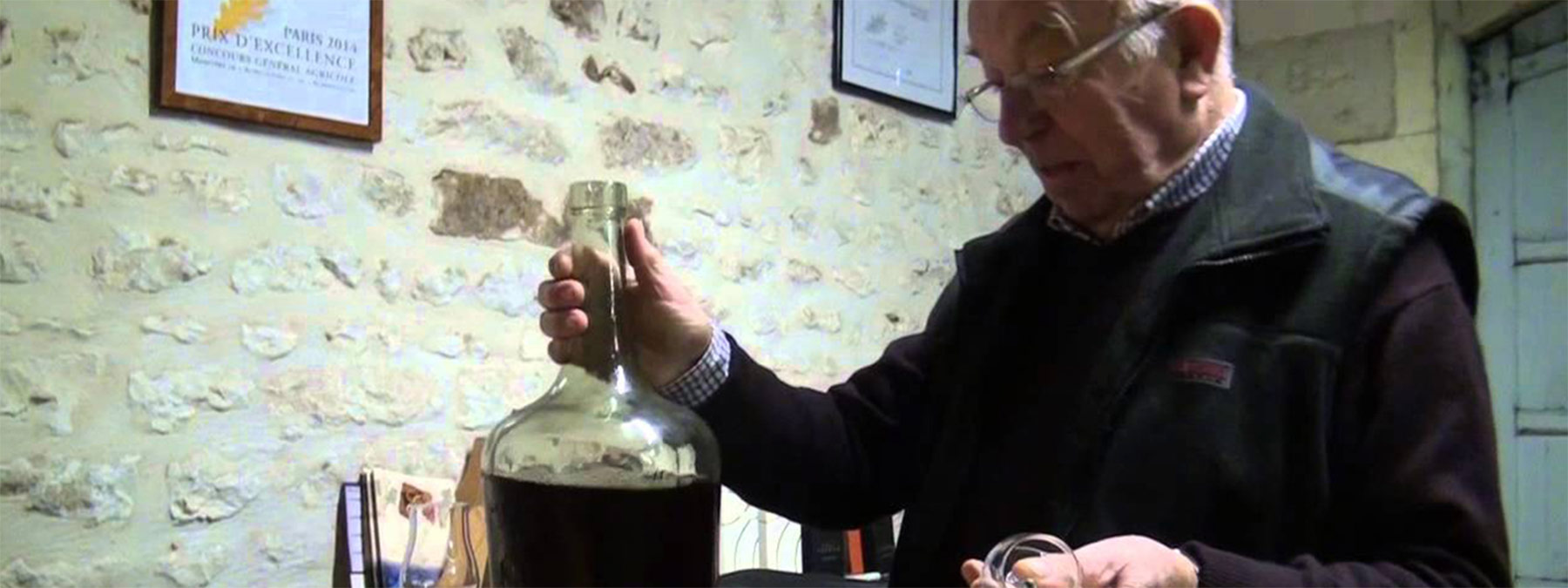
The family home, which still boasts the pre-phylloxera high-de-vie, practices the same processes inherited from past generations, thus ensuring that it remains a more artisanal activity possible. The aging of these fine cognacs takes place in medium-sized oak barrels from the Limousin region in damp cellars, under strict control and for a long period of time, much longer than standard practices. Initially placed in new barrels, the eaux-de-vie are quickly transferred to older barrels with a capacity of 400-450 liters, called fûts roux to carry on the long maturation process, made possible by the porosity of the wood. The vapors of alcohol, called "the part of the Angel" (La Part des Anges in French), lead to a loss of almost 2% of the stocks of Cognac every year, but it is essential to improve the natural aromas of the eaux- de-vie and thus create the most valuable existing cognac.
Distillates have different alcoholpercentages. So, we have defined a parameter allowing you to better understand and compare different prices. This parameter is calculated by dividing the bottle price by the alcohol content. The alcohol content (or strength) is the amount of pure alcohol (ethanol) contained in the distillate.
This parameter indicates the price of a single 4cl dosage of distillate. It is calculated by dividing the price of the bottle by its quantity (expressed in cl), then multiplying by the centilitres of the recommended single dose, as average in cocktail recipes.