Whatever important date can be identified in the progress of humanity over the last 125 years, Glenfiddich was there: not by chance, time has always been one of the fundamental values put in place by the production rules of the distillery - family owned from the foundation to the present - with its slogan 'every year counts'.

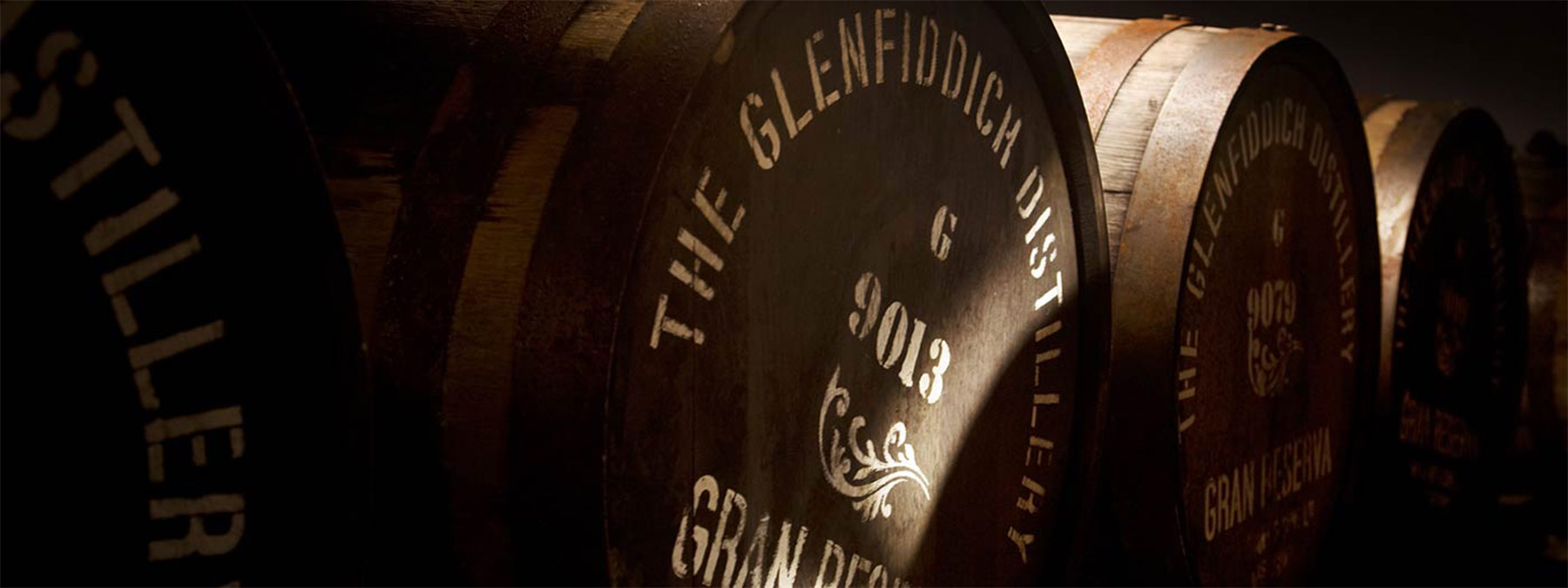
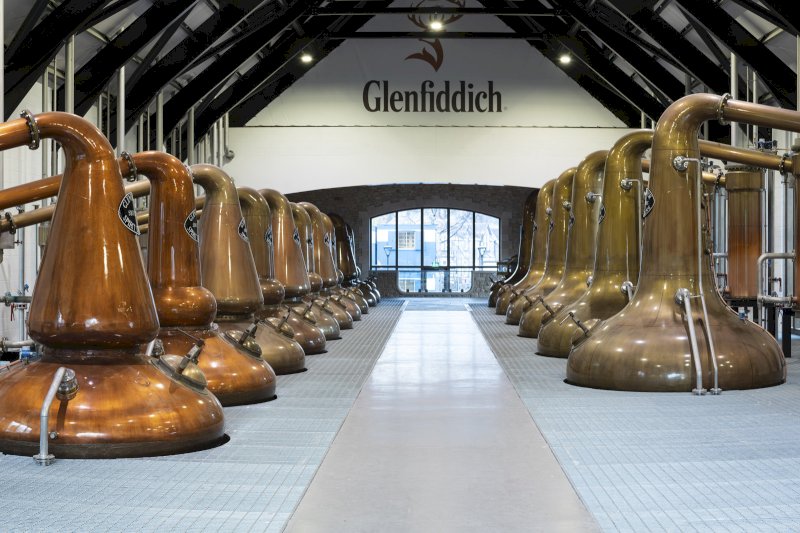
With the first drop of distillate produced at Christmas 1887 in the Glen of Fiddich (Deer Valley in Gaelic) with the ambition to produce 'the best dram in the valley', the iconic Dufftown distillery with 24 washbacks, 28 pots stills and a stock of over 800,000 barrels made his pioneering spirit an absolute workhorse.
Remained at the end of the 1920s and at the end of Prohibition in the USA, one of the six distilleries operating in Scotland, Glenfiddich embraced a new period of growth in demand for the category, assuming for the first time people dealing full-time with the maintenance of pot stills; Glenfiddich was the first whisky to adopt the distinctive triangular bottle in 1961 designed by Hand Schleger and it was always Glenfiddich the first Scotch whisky to bear the name single malt, in the export outside the United Kingdom, actually founding the category in 1963.
With the bottling in 1991 and 2009 of 50 bottles of a single malt aged 50 years and with the release in 2001 of 61 bottles from a cask of 1937 in honor of the last of ten generations of 'Warehousemen' alternating in time, Glenfiddich has shown attention in celebrating the years of aging of his whisky and the depth of his barrel stock.
Years of experience as independent producers make Glenfiddich a reference point in the Scotch Whisky world, combining traditional ripening with innovative refinements. Also for this reason, today Glenfiddich is the best selling single malt in the world.

Distillates have different alcoholpercentages. So, we have defined a parameter allowing you to better understand and compare different prices. This parameter is calculated by dividing the bottle price by the alcohol content. The alcohol content (or strength) is the amount of pure alcohol (ethanol) contained in the distillate.
This parameter indicates the price of a single 4cl dosage of distillate. It is calculated by dividing the price of the bottle by its quantity (expressed in cl), then multiplying by the centilitres of the recommended single dose, as average in cocktail recipes.