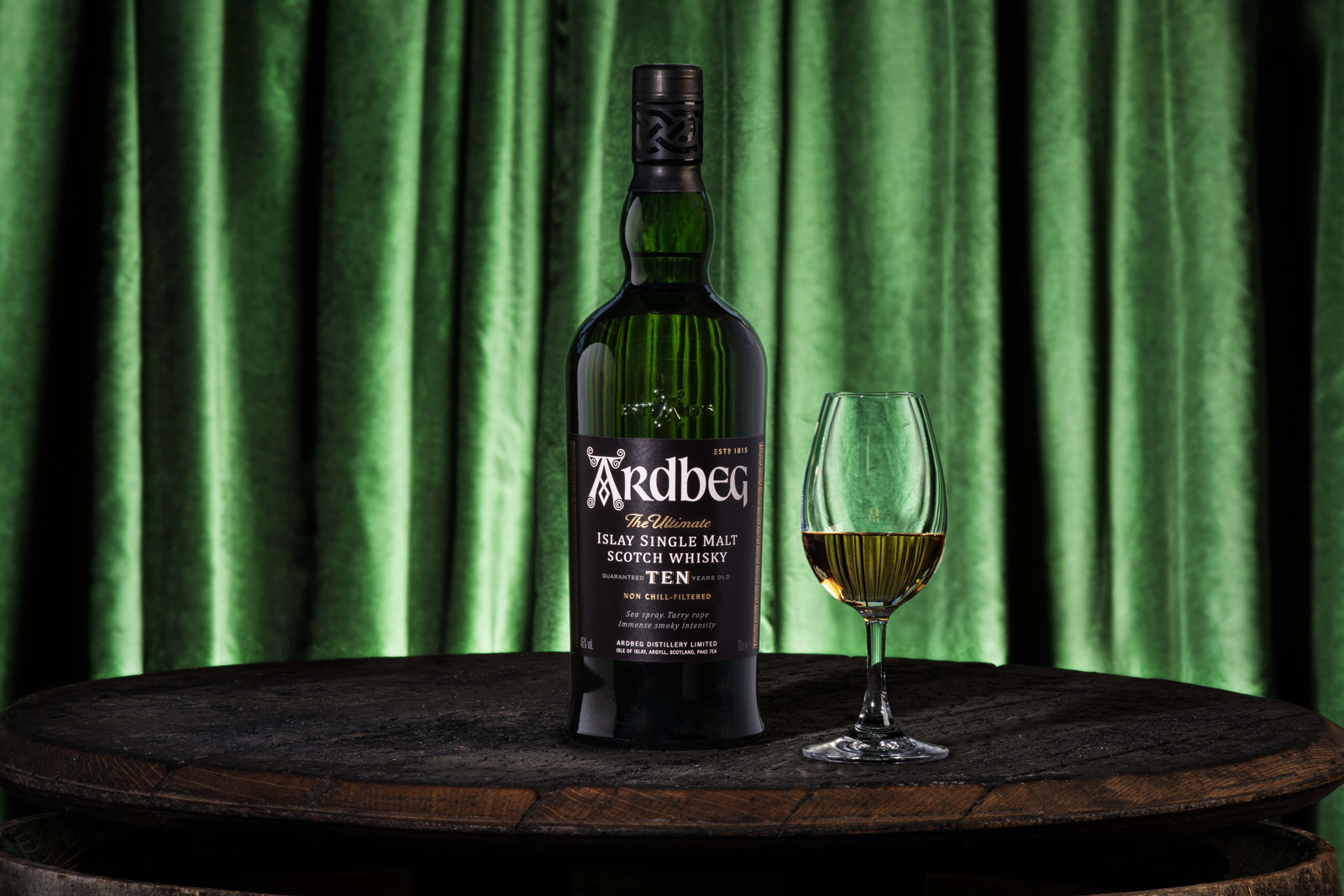
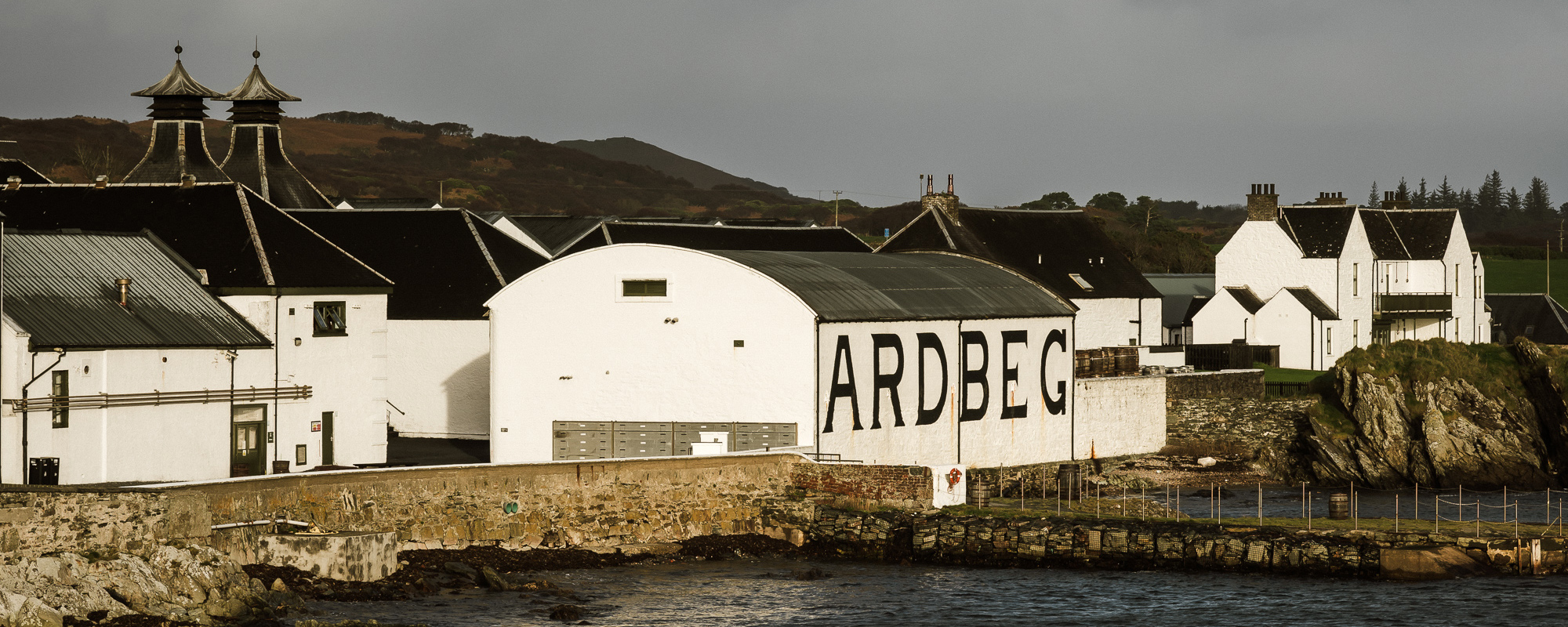
Ardbeg is a cult distillery among lovers of great Scotch whiskies, and its single malt is renowned as one of the most peated, smoky, and complex. Overlooking a small bay in the village of Port Ellen, on the legendary island of Islay, its name derives from the Gaelic An Àird Bheag, meaning “small promontory”.
Although illicit whisky production in the area likely dates back some years earlier, the distillery was officially founded in 1815 by John McDougall after obtaining a license to distill. In the following years, after its sale in 1838 to Thomas Buchanan, a merchant from Glasgow, Ardbeg began to build a reputation beyond the island, while remaining deeply connected to its geographical and cultural roots.

Over the decades, the distillery went through periods of great prosperity as well as very difficult times: the growing demand for blends from the 20th century onward, followed by changes in ownership, led to several episodes of temporary closure. Ardbeg was rescued from decline and relaunched in 1997, after its acquisition by Glenmorangie, owned by the French company LVMH, which continues to preserve its identity and support its expansion.
Since 2000, Ardbeg has truly risen from its ashes like a phoenix, and today produces multi-award-winning single malts that have become legendary among a devoted following of enthusiasts.

What makes Ardbeg truly unique is its deep integration with the environment of Islay. The heather, peat bogs, and Atlantic climate give both barley and water intrinsic characteristics that are reflected in the final distillate.
The malt used by Ardbeg comes from the malting facilities of Port Ellen and is dried over peat fires: this process imparts to the barley an intense smoky, phenolic, and maritime character, which becomes an integral and distinctive part of the final profile.
The water comes from local lochs such as Loch Uigeadail, whose quality—together with the peat-rich soil—is essential in achieving a distillate balanced between power, depth, and elegance.

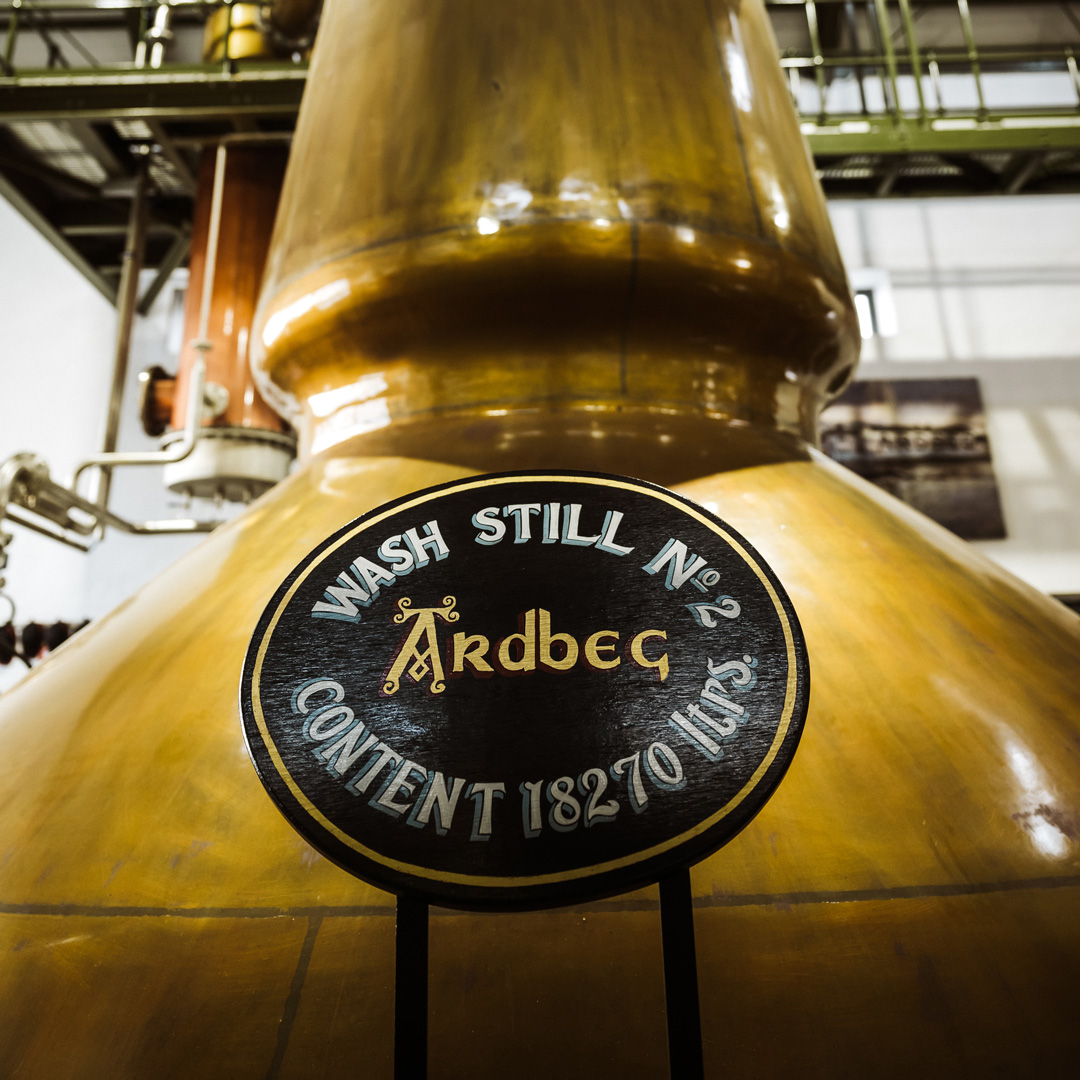
Although Ardbeg is a relatively “small” distillery compared to the giants of Speyside, its structure is highly efficient: it operates two generously sized pot stills (a wash still of around 18,000 liters and a spirit still of around 17,000 liters), allowing it to produce approximately 1.4 million liters per year, equivalent to about 10,000 casks.
In recent years, the distillery has launched an expansion plan: a new “still house” is under construction and is expected to double production capacity, a clear sign of Ardbeg's ambition to grow while preserving its identity.
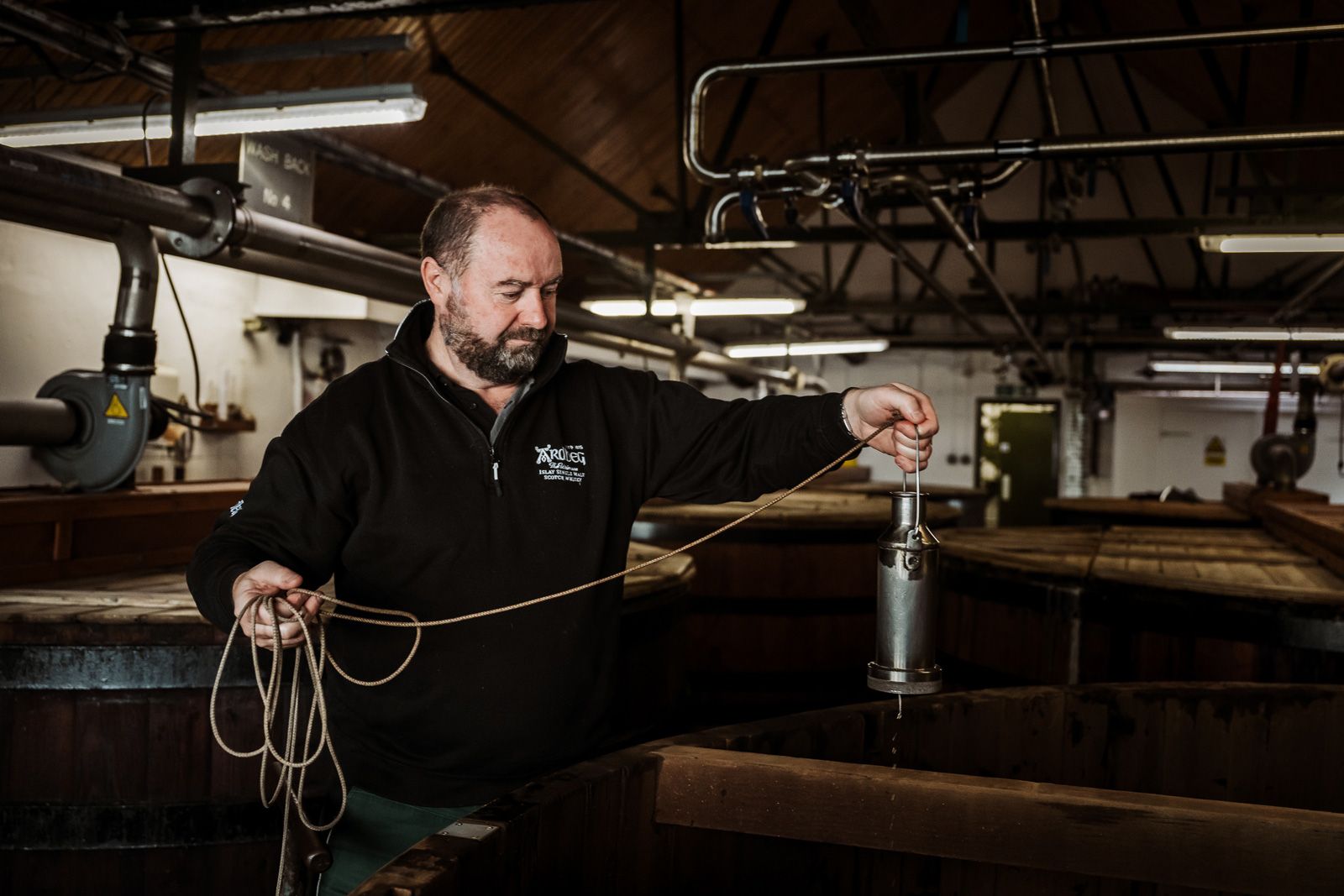
Production faithfully follows the traditional method: malted barley, peat, fermentation in “washbacks”, distillation in pot stills, and maturation in casks—often ex-bourbon, sometimes ex-sherry or other varieties—which deliver smoky intensity alongside aromatic complexity, with notes of citrus, vanilla, malt, and spices.

Ardbeg perhaps represents the most powerful emblem of Islay whisky: a perfect balance between wild nature and craftsmanship, between ancient heritage and contemporary boldness. Its whisky—peated, maritime, smoky—encapsulates an entire territory, a cultural legacy, and a production philosophy that allows no compromise. Despite its smoky nature, Ardbeg is renowned for its delicious sweetness, a phenomenon affectionately known as “the peat paradox.”
Since 2000, its legacy has been preserved by the Ardbeg Committee, made up of thousands of followers worldwide and founded with the specific aim of ensuring that the distillery’s doors never close again. Today, it counts over 100,000 members across more than 130 countries, who are regularly engaged by the distillery through exclusive activities, tastings, and events. Finally, some of the highly exclusive special releases that Ardbeg launches each year are dedicated precisely to Committees around the world.

Distillates have different alcoholpercentages. So, we have defined a parameter allowing you to better understand and compare different prices. This parameter is calculated by dividing the bottle price by the alcohol content. The alcohol content (or strength) is the amount of pure alcohol (ethanol) contained in the distillate.
This parameter indicates the price of a single 4cl dosage of distillate. It is calculated by dividing the price of the bottle by its quantity (expressed in cl), then multiplying by the centilitres of the recommended single dose, as average in cocktail recipes.