If all tequilas are technically mezcal, the reverse is not true. All alcohol produced from agave juice was originally called mezcal. The distinction between the two spirits first appeared in the nineteenth century, when the industrial revolution made it possible to cook agave cores (called piñas) in steam ovens. This technical improvement was quickly adopted by most producers in the state of Jalisco, who soon left the traditional cooking method in pit ovens dug into the ground to Oaxaca mezcal producers.


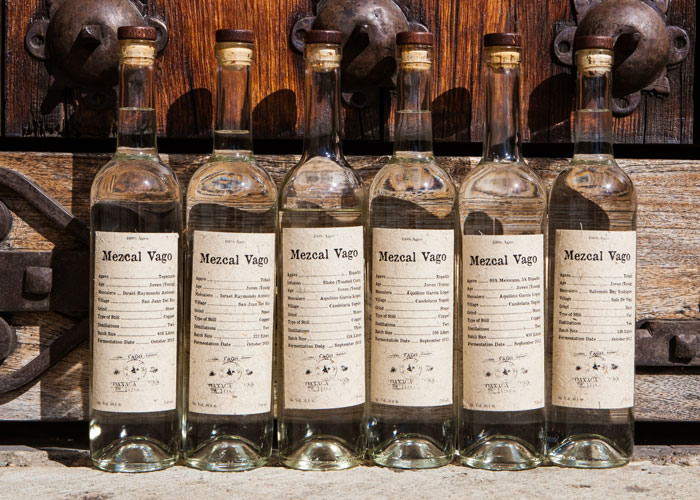
The mezcal market still largely depends on domestic distillation. Produced on farms, some of which are located at an altitude of more than 2000 meters (San Louis del Rio), mezcal production fits naturally into the agricultural cycle and rarely exceeds 400 liters per month. There are an estimated 500 producers of mezcal who still use traditional methods. After 2005 each distillery, regardless of its size, has been assigned a NOM or identification number shown on the label to identify the origin of the product.

MMezcal is legally produced in seven Mexican states: Oaxaca, Guerrero, Guanajuato, San Luis Potosi, Zacatecas, Durango and Tamaulipas. In most places, natural geological constraints – mountains and poor soil – limit agave farming, which cannot be intensive except in the state of Jalisco. Terrace farming is widely used, and the rarest varieties have a yield per hectare not exceeding 400 plants. While only one agave variety, called Tequilana Weber Azul, can legally be used to produce tequila, mezcal can be made from different species grown in each state, the dominant variety being espadin.
In the state of Oaxaca, espadin makes up nearly 90% of agave farming, exposing local growers to the same risks as those in Jalisco – growing a single, continuously cloned variety weakens the plant's genes and promotes the proliferation of diseases and insects (caterpillars). Agave growers are constantly exposed to the risk of losing many years of work in just a few months. To avoid this, many of them promote diversity and grow other varieties as well.

PRODUCTION
The nine legally authorized states
1. OAXACA
2. GUERRERO
3. PUEBLA
4. MICHOACAN
5. GUANAJUATO
6. SAN LUIS POTOSI
7. ZACATECAS
8. DURANGO
9. TAMAULIPAS

DEFINITION OF MEZCAL
Mexican spirit made by fermenting and distilling the juice of agaves grown in seven legally authorized states.
There are several varieties of mezcal: espadin, tobalà, tobazicas, cenizo, papalometl. 100% agave mezcals are distinguished from mixed mezcals made from at least 80% agave juice. Both these categories must be bottled in Mexico in order to qualify for the Mezcal designation.
HARVEST AND COOKING
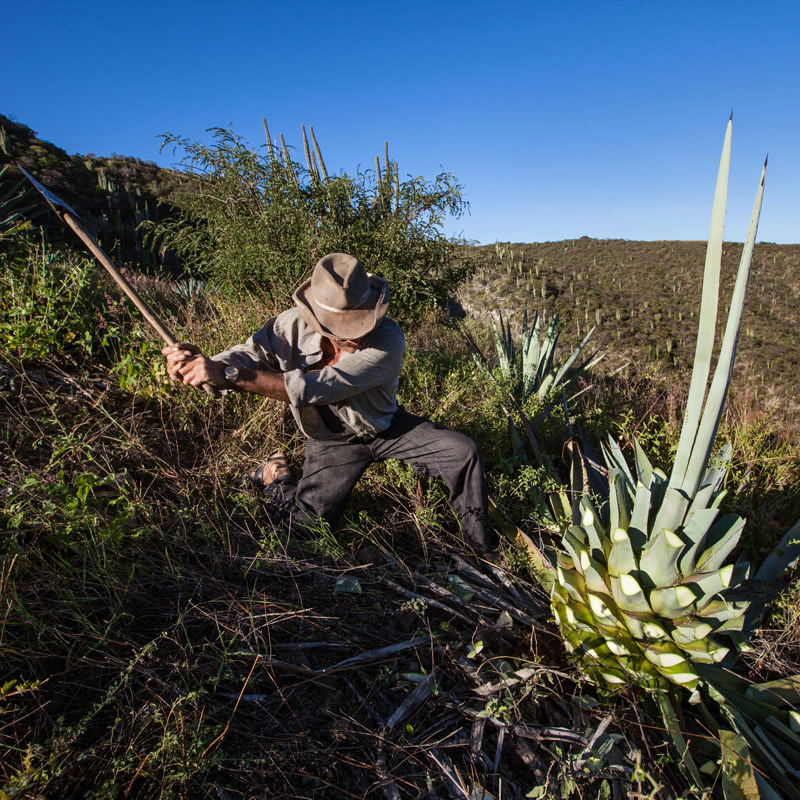
Once pulled up from the soil, agave plants are stripped of their leaves to expose the core called piña. A 70-kg piña will produce about 10 liters of alcohol. Cut in two or four, the piñas are placed inside underground ovens called palenques. Cone-shaped, over 3 meters wide and 2.5 meters deep, these ovens are tiled with stones and preheated 24 hours before cooking the piñas. Covered with fibrous agave residues still moist from previous cooking batches, the piñas are buried under a pile of palm leaves, agave leaves and dirt and left to cook for 2 or 3 days. Once cooked, they are uncovered and left to rest in the open air for a week.
MASHING
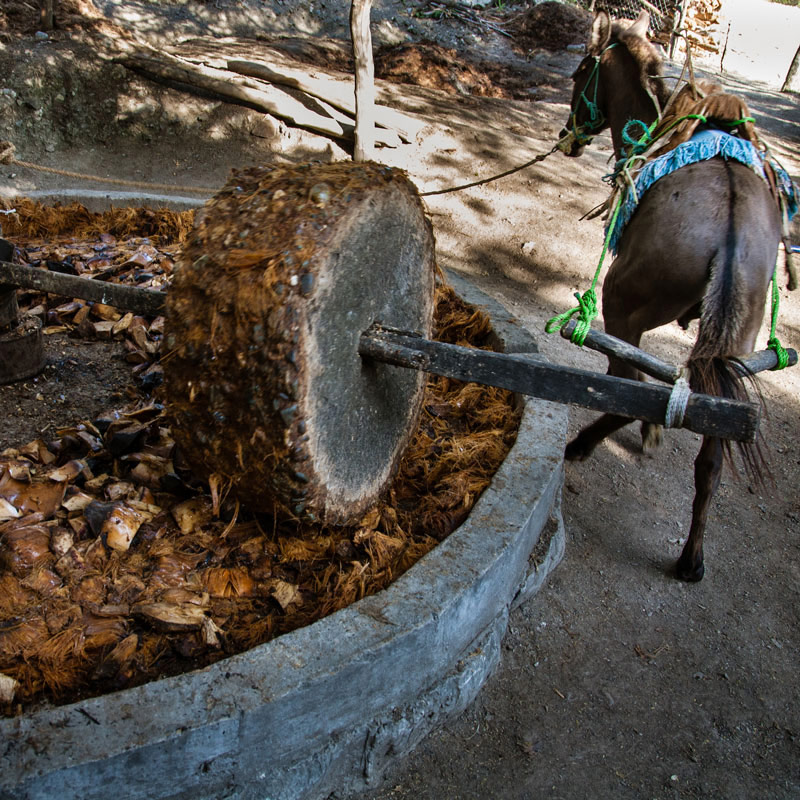
This is where a first spontaneous fermentation occurs. The piñas are then ground in a stone mill turned by a donkey or a horse. The pulp, juice and fibers are mixed with water (about 10%) to produce a sugary liquid.
FERMENTATION
The resulting fermentation liquid is poured into a wooden vat. A second natural fermentation begins, which can last from one to four weeks.
DISTILLATION
Distillation is normally done in copper stills (introduced by the Spanish) or ceramic stills (introduced by the Chinese). The must is poured into the still along with part of the fibrous agave residues. At the end of the first distillation, the still is emptied before the second distillation.
AGEING
Mezcal is traditionally aged in ceramic jars. However, these are increasingly being replaced by steel vats. Casks were introduced relatively recently (1950) and most are ex-bourbon casks. Ex-sherry casks are used for special vintages.


100% AGAVE: mostly handcrafted by small-scale producers in very limited quantities, 100% agave mezcals can be made from a single agave variety (“single agave”) or from a mixture of several varieties ("blend of agave"). 100% agave mezcals cannot contain any other ingredient.
MIXTOS: Mezcal made from at least 80% agave juice and 20% other juices, often sugar cane juice.
Abacado: more commonly known as "blanco" or "joven", this type of mezcal is clear and comes straight from the still.
Reposado & Madurato: mezcal aged for 2 to 11 months in oak casks or large barrels.
Añejo: aged at least 12 months in oak casks with a capacity not exceeding 200 liters, it can sometimes be several years before this mezcal is bottled.
Minero: This historic type of mezcal was created for gold and silver mine workers in colonial times. Back then, minero mezcal was the most expensive and considered the finest. As its production did not depend on a single agave variety, it was often made by triple distillation. At the time, only a miner could afford this spirit.
Pechuga: macerated in a vat with fruit (apples and plums), this mezcal then undergoes a third distillation. Fun fact: a chicken or turkey breast is hung above the vat or inside the still to extract the fruity notes.
Crema di Mezcal: only recently authorized, Crema de Mezcal is not necessarily produced from milk or cream as the name might suggest. What makes it distinctive is that it’s made with fruit, nuts and spices which make it more akin to a liqueur.
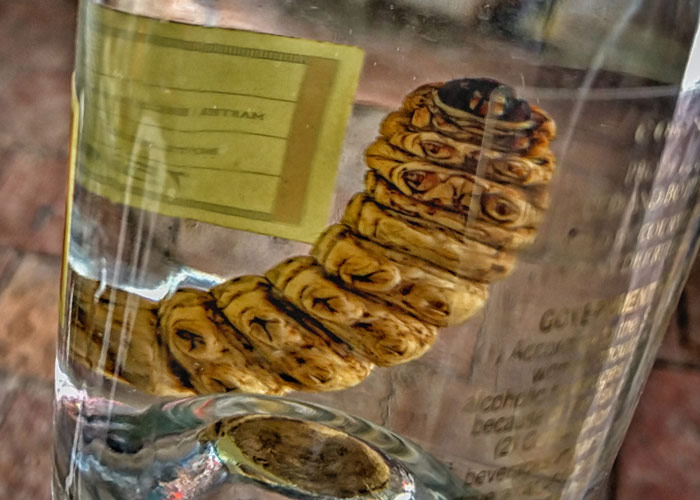
Gusanito: or "little caterpillar". In traditional mezcal production this insect, which can lay waste to entire agave fields, is macerated at the bottom of the bottle. The red caterpillar devours the core of the piña, while the white caterpillar prefers the leaves.

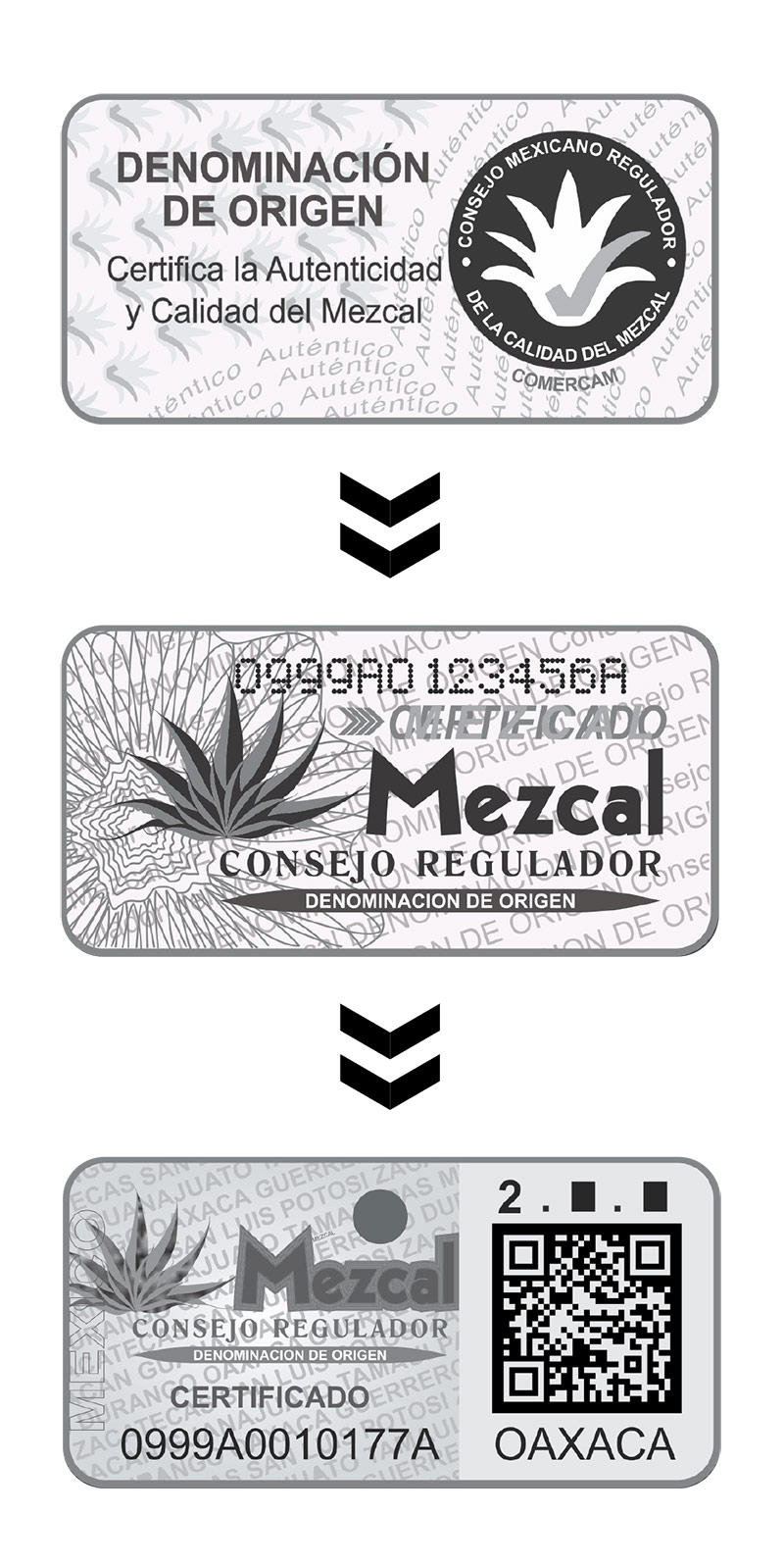
“SI NO TIENE HOLOGRAMA
NO ES MEZCAL”
In order to regulate mezcal production, the CRM (Consejo Regulador del Mezcal) grants a holographic badge that must be placed on each bottle of certified Mezcal. As of 2014, the badge must be designed as follows:
• it’s customized for each company and brand
• it contains a unique number per bottle, for example: 0999A1234567A
Mezcal is to Mexico what Islay malts are to Scotland – the expression of a unique terroir and production method. They both share a naturally smoky character which makes them similar in taste. In the case of mezcal, this taste is becoming increasingly popular on the strength of the inspiration and creative talent of a host of mixologists.
Due to the different agave varieties used and a still largely traditional production method, mezcal offers an amazing variety of different aromas and flavors. As well as each mezcal's unique character, the recently introduced practice of aging in oak barrels is bringing an even larger range of aromas to this spirit.
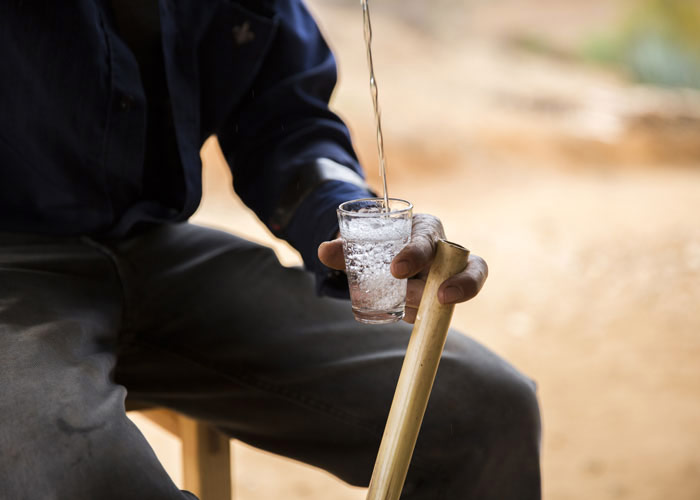
Whether "blanco" or "añejo", mezcal should be tasted neat, at room temperature for aged versions or lightly chilled for "blanco" versions. The CRT (Tequila Regulatory Council) has designed a special “tulip” glass for tasting tequila and mezcal, but INAO glasses are also suitable.

Distillates have different alcoholpercentages. So, we have defined a parameter allowing you to better understand and compare different prices. This parameter is calculated by dividing the bottle price by the alcohol content. The alcohol content (or strength) is the amount of pure alcohol (ethanol) contained in the distillate.
This parameter indicates the price of a single 4cl dosage of distillate. It is calculated by dividing the price of the bottle by its quantity (expressed in cl), then multiplying by the centilitres of the recommended single dose, as average in cocktail recipes.