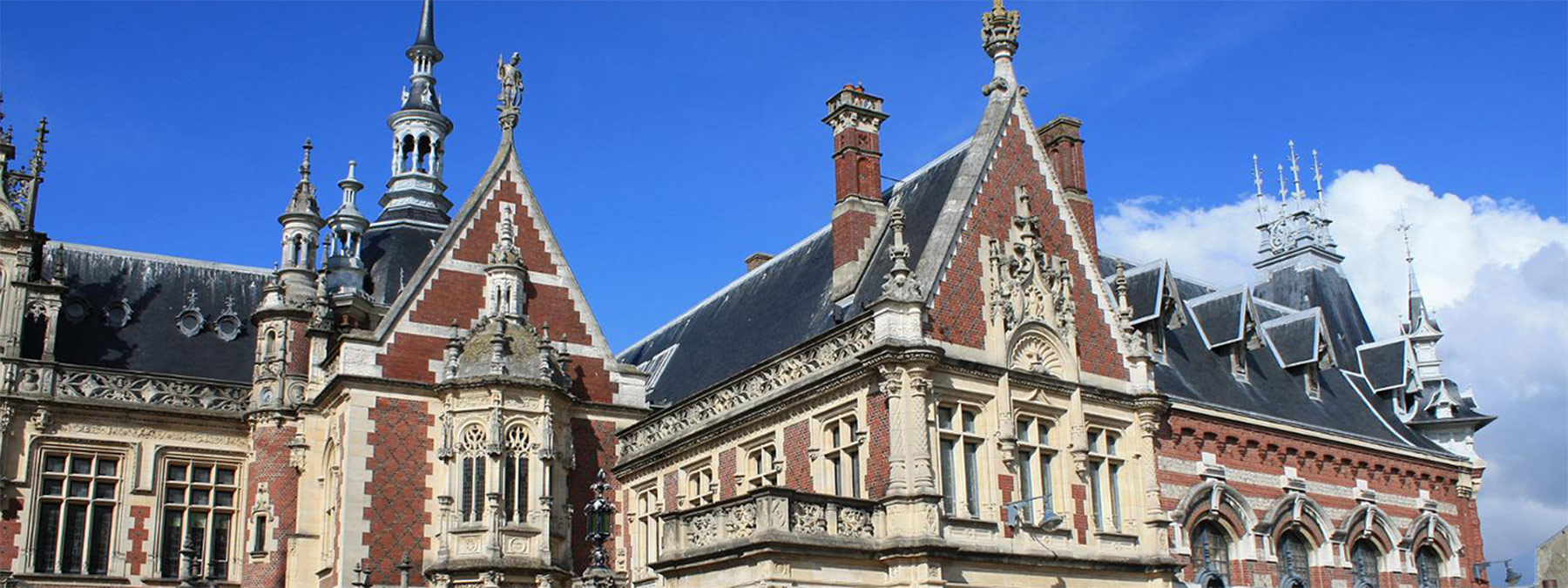
Legend says that the first version of this historic liqueur was born in 1510 in Normandy from the experiments of a Venetian monk, whose original recipe, however, was lost after the tumults of the French revolution. In 1863, a wine merchant, Alexandre Legrand, mysteriously came into possession of an ancient document which contained the recipe for a liqueur made up of 27 oriental and European spices, which he began to manufacture in the abbey of Fécamp in Normandy, with the name of Bénédictine.
The abbreviation D.O.M. (Deo Optimo Maximo, from Latin: To God, the best, the greatest), was inserted later in order to distinguish the original from the numerous imitations that were appearing in those years. The current recipe is still kept secret (it is said there are three copies scattered around the world), but the taste of this liqueur is authentic and characterized by an engaging taste due to the numerous distillation processes and by about two years of aging.
Distillates have different alcoholpercentages. So, we have defined a parameter allowing you to better understand and compare different prices. This parameter is calculated by dividing the bottle price by the alcohol content. The alcohol content (or strength) is the amount of pure alcohol (ethanol) contained in the distillate.
This parameter indicates the price of a single 4cl dosage of distillate. It is calculated by dividing the price of the bottle by its quantity (expressed in cl), then multiplying by the centilitres of the recommended single dose, as average in cocktail recipes.