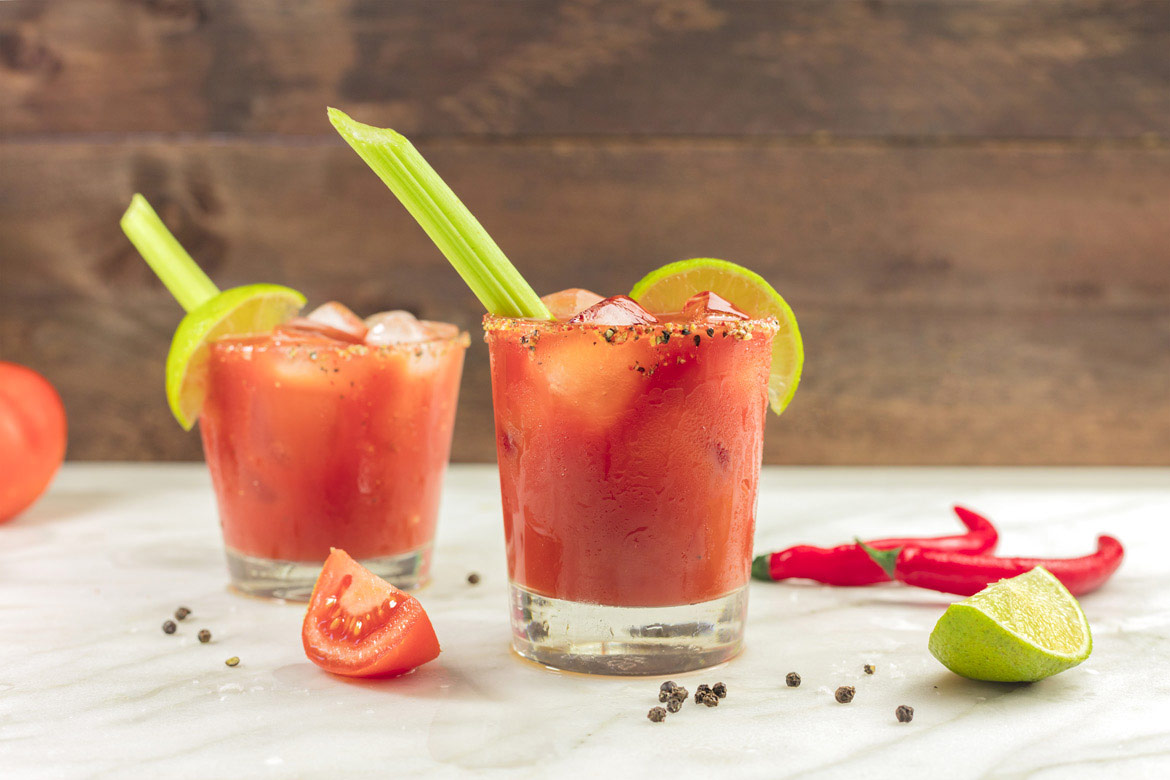
The inventor of the Bloody Mary was French bartender Fernand Petiot in 1920, who was then working at the famous Harry's New York Bar in Paris. Contrary to popular belief, this cocktail was not named after Mary of Scots, known as Bloody Mary because of the fierce repression of Protestants during her short reign. In fact, it seems that one of Petiot's customers, the actor and singer Roy Barton, named the drink after the Bucket of Blood club in Chicago, where he performed several times.
The first version of the Bloody Mary involved only equal parts tomato juice and vodka.
When Petiot moved to the United States and started working at the King Cole Bar in the Saint Regis Hotel in New York in 1933, legend has it that manager Serge Obolansky found the cocktail a little bland when he tasted it. Petiot then added salt, pepper, lemon juice and Worcestershire sauce, creating the modern version of the Bloody Mary, which for a while was also called the Red Snapper, as the original name sounded a little too dark for the hotel's refined clientele. However, everyone continued to call it the Bloody Mary, and today the Red Snapper is the version with gin instead of vodka.
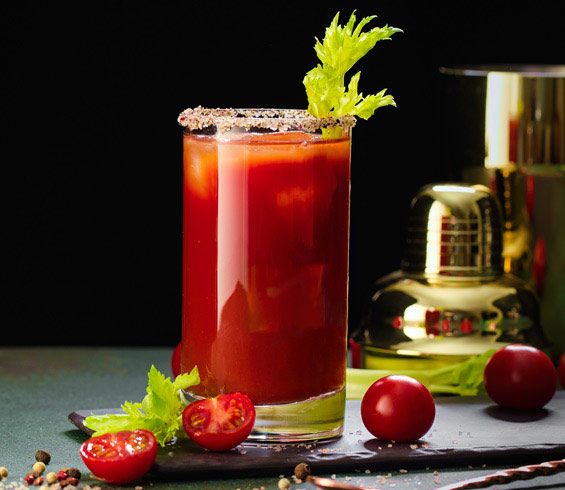
Then, in the 1960s, a bartender at the Ambassador Hotel in Chicago noticed that a client was mixing the Bloody Mary with a celery stalk, and he had an epiphany: it was then that the habit of using it to garnish drinks became widespread.

Does the perfect Bloody Mary exist? Certainly there are many versions, and there is much debate about the best way to prepare it. There is also no consensus on whether or not ice is needed in the recipe. The only thing that is certain is that the Bloody Mary, which officially turned 100 years old on 15 December 2021, is undoubtedly one of the most loved - and prepared - cocktails in the world.
It's no coincidence that the United States, where this drink is so popular, even celebrates National Bloody Mary Day on 1 January. And it's no coincidence that this date was chosen, as the cocktail is considered one of the most effective hangover remedies.
Traditionally, the Bloody Mary should be drunk by 3pm. In addition to the classic celery stalk, the decorations can be as varied as they are puzzling: in the history of this cocktail, oysters, boiled eggs, fish fingers, sea urchins and even chilli con carne have been used.
According to legend, Hemingway drank his version prepared in a jug: half a litre of vodka, half a litre of tomato juice, an entire bottle of Body sauce, the juice of two limes, a pinch of salt, celery, black pepper and cayenne pepper.
4.5 cl Tito's Hand Made Vodka
9 cl Niasca Portofino Tomato Juice
1,5 cl Fresh Lemon Juice
4 drops of Worchestershire Sauce
Tabasco
Celery Salt
Pepper
It is prepared in the Mixing glass using the 'rolling' technique, which consists of pouring the ingredients into the metal part of the shaker and then into the glass part, repeating the operation three times.
Finally, pour the contents into a glass with fresh ice.
Mix gently and serve in the highball glass and garnish with a celery stalk and a lemon slice.
Celery salt for edging the glass
5 cl Tito's Handmade Vodka
12 cl Clamato juice
2 drops of Worcestershire sauce
2 drops of Tabasco sauce
Prepared horseradish, to taste (optional)
Decoration: cucumber stick - lime wedge - celery stalk
In 1969, the owners of the Calgary Inn in Calgary, Alberta, asked Walter Chell, the Montenegrin who ran their Owl's Nest bar, to create a recipe to represent their new Italian restaurant in a competition. Chell took some vodka, a little Worcestershire and some Tabasco, added a mix of clam and tomato juices and dubbed it the 'Bloody Caesar'. The result was so popular that it became the national drink of Canada.
1 pinch of salt
15 cl Portofino tomato juice
1 pinch of cayenne pepper
1 lime wedge
1.5 cl freshly squeezed lime juice
2 drops of Worcestershire sauce
2 drops of Tabasco sauce
1 pinch of ground black pepper
1 pinch celery salt
1 bottle of Mexican lager, chilled
Add equal parts salt and cayenne pepper to a small plate. Rub the lime wedge along half the rim of the pint glass, and then dip the rim into the salt and cayenne pepper mixture. Add the lime juice, tomato juice, Worcestershire sauce, Tabasco, black pepper and celery salt to the glass. Fill with the beer and garnish with a lime wedge.

Distillates have different alcoholpercentages. So, we have defined a parameter allowing you to better understand and compare different prices. This parameter is calculated by dividing the bottle price by the alcohol content. The alcohol content (or strength) is the amount of pure alcohol (ethanol) contained in the distillate.
This parameter indicates the price of a single 4cl dosage of distillate. It is calculated by dividing the price of the bottle by its quantity (expressed in cl), then multiplying by the centilitres of the recommended single dose, as average in cocktail recipes.