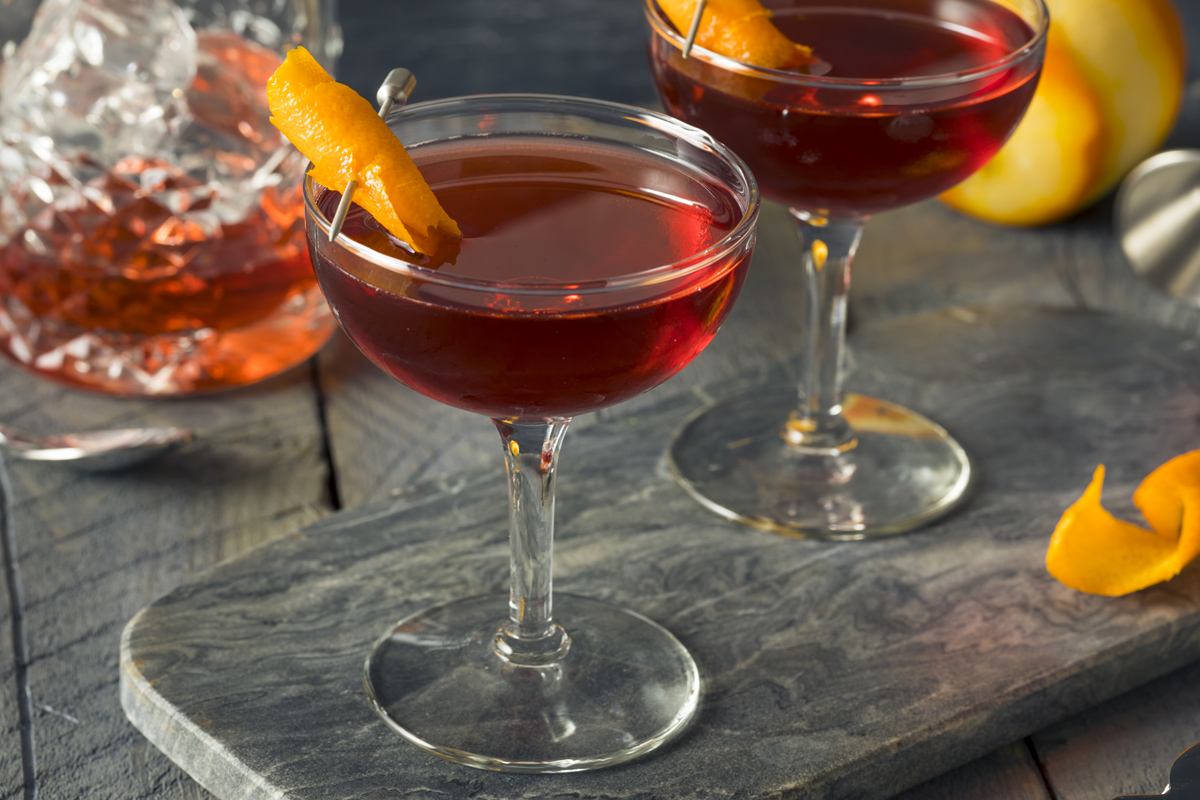
Traditionally, a 'boulevardier' is a sophisticated man who enjoys refined cocktails and frequents fashionable establishments, just like those found along certain Parisian boulevards.
It is therefore clear from the name how this cocktail is known as the 'elegant' alternative to the Negroni, differing from its Italian cousin by only one ingredient: bourbon whiskey instead of gin.
The Boulevardier cocktail is officially mentioned in the 1927 book 'Barflies and Cocktails', written by legendary bartender Harry MacElhone. Of Scottish descent, who emigrated to the USA and then returned to old Europe because of Prohibition, MacElhone was the soul of the famous Harry's New York Bar in Paris, one of the best cocktail venues and a meeting place for many emigrants from the USA. Here, according to MacElhone, it was the writer and journalist Erskine Gwynne, a regular at the bar and founder of The Boulevardier magazine, who invented the eponymous cocktail.
With its chic allure, the Boulevardier is considered a great classic among cocktails, and its fame as a variant of the Negroni, instead of overshadowing it, has helped to make it known to many more people.
The ingredients must be chosen very carefully, so as to create the perfect harmony between the base spirit and the sweet vermouth. Most recipes - and especially the official IBA cocktail recipe - use Bourbon, but it is also possible to choose rye whisky.
The fundamental difference with the Negroni, apart from the use of whisky instead of gin, lies in the quantities: for the Boulevardier the spirit - i.e. the bourbon - is in slightly larger quantities than the other ingredients.
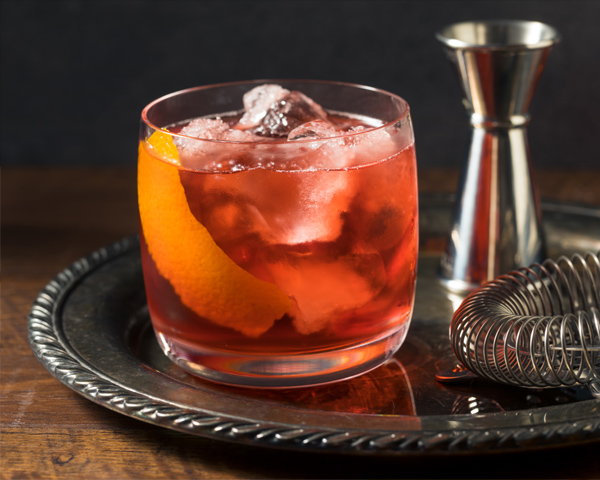

Boulevardier
- 45 ml Bourbon or Rye Whisky
- 30 ml of Bitter
- 30 ml sweet red vermouth
Pour all ingredients into a mixing glass with an ice cube. Stir. Strain into a chilled cocktail glass.
For the garnish, use orange peel, or alternatively lemon peel.
Distillates have different alcoholpercentages. So, we have defined a parameter allowing you to better understand and compare different prices. This parameter is calculated by dividing the bottle price by the alcohol content. The alcohol content (or strength) is the amount of pure alcohol (ethanol) contained in the distillate.
This parameter indicates the price of a single 4cl dosage of distillate. It is calculated by dividing the price of the bottle by its quantity (expressed in cl), then multiplying by the centilitres of the recommended single dose, as average in cocktail recipes.