Ti potrebbe interessare anche…








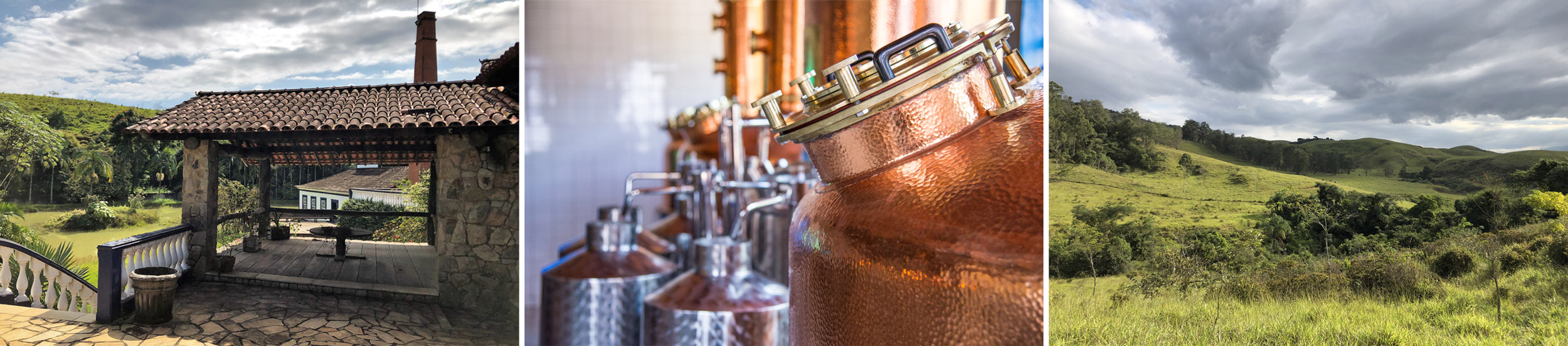

Amázzoni Gin
Each Amázzoni bottle is individually produced from recycled glass, using the oldest glassblowing techniques for a design reminiscent of the medicinal flasks of the Renaissance. On the bottle we find five symbols that tell as many stories:
The Drop - the sacred water, which goes back to the legend of the Guarani Indian Naià, who in trying to embrace the moon fell into the water and was transformed by it into a star.
The sprout - the seed sprouts from its roots, nothing is created, nothing is destroyed, everything is transformed.
The still - it is called Estrela and was designed and manufactured in Brazil.
The symbol of 'captain' Tato Giovannoni, who created the gin recipe.
Arowana - a fish known to propitiate health and luck, the key to life.

Rio Negro
Two years after the birth of the first gin, Amazzoni has launched Rio Negro, an ambitious version conceived by new Master Distiller Alexandre Mazza. What has changed is the preparation: the classic cold infusion of botanicals is now joined by juniper, coriander and lemon peel, directly in Pot Still in solid form. An extraordinary gin. Also on this bottle are five symbols, which continue the legend of Naià:
The cloud - represents Tupà, creator of the universe.
The cobra - Tupà's son, he was mutated into a snake by him for falling in love with Naià, and crawled into the bed of the Rio Negro.
The hands - the raised hands of Naià that fell into the water.
The waters - those of the rivers and those of the rain in the forest.
The map - the route of the Amazon and Rio Negro.
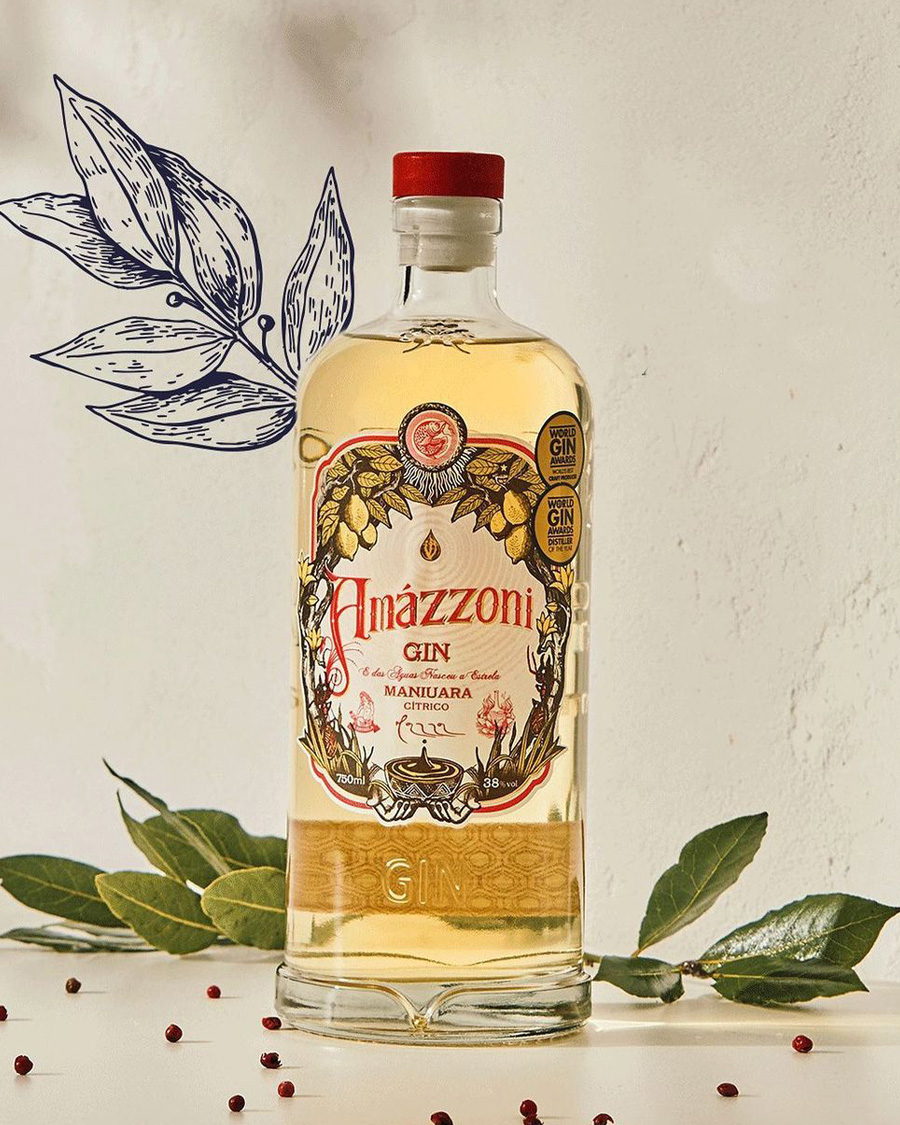
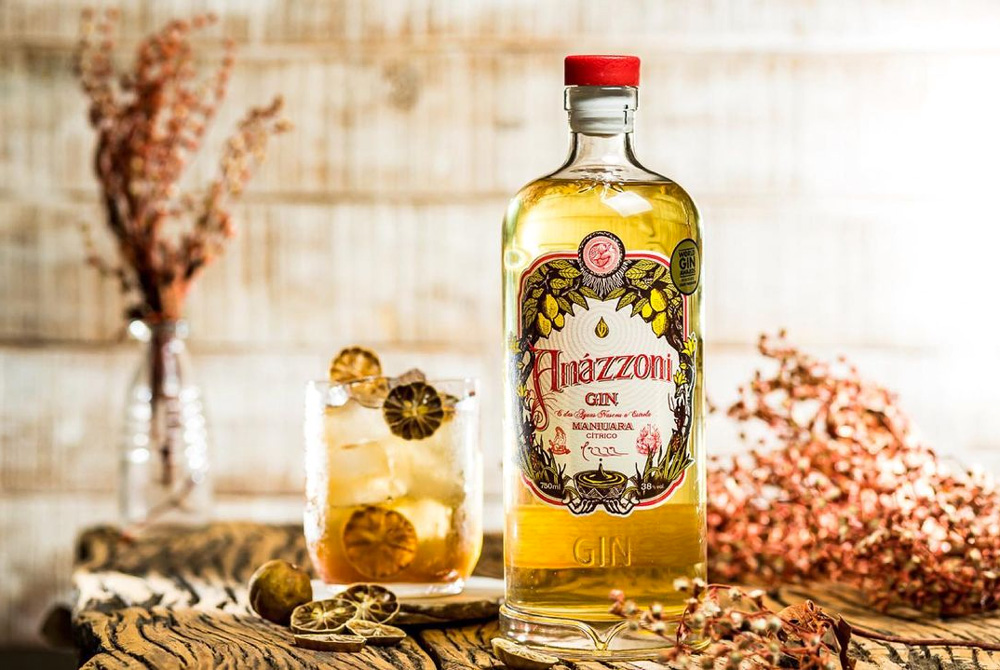
Amázzoni Maniuara
Maniuara is the first Old Tom produced in Brazil and at 38° is also the lightest gin on the market. A nectar full of verve and fresh lemon aromas, produced from a classic first distillation and a second one with lemongrass and lemon peel, macerated in solid form. The five symbols of this bottle are:
The colour red - the colour of the ant after which gin is named, and the body paint of would-be warriors
Lemongrass - an authentically Brazilian plant
The ant - a traditional element in indigenous cuisine, particularly prized for its spicy and fresh, delicately sour flavour.
The bowl - contains the sacred potion made from local plants and ingredients that future warriors drink before initiation.
The hands of the Pajé - the Pajé is the shaman who presides over the rite of passage of the young warriors, and in his hands he holds the consecrated bowl.