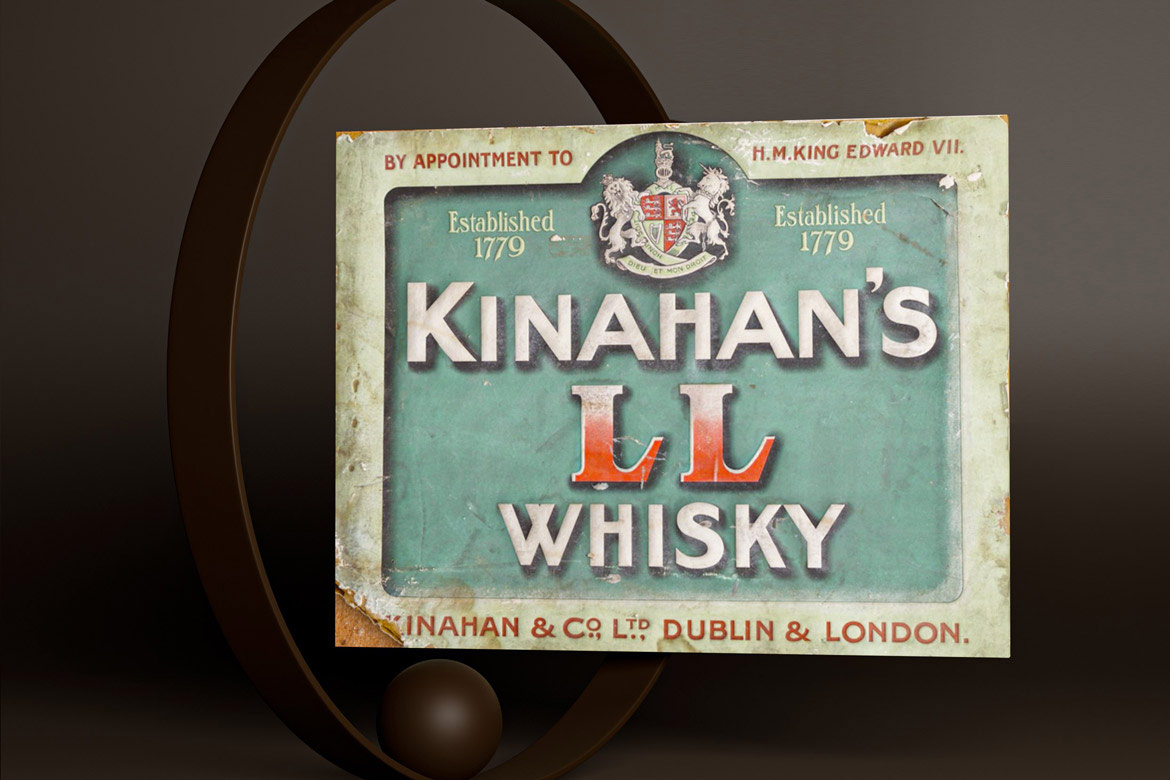
Founded in Ireland in 1779, Kinahan’s is a true 'pioneer of Irish whiskey'. Kinahan's revolution was to focus on cask ageing at a time when the spirit was consumed white, under the name poitìn.
Loved by Jerry Thomas, Kinahan's whiskies have gone through eras of glory and even the Irish whiskey crisis, right up to the present day: as of 2019, Kinahan's has become the first Irish producer to use hybrid casks for its whiskies, and has received much praise for its innovative approach to the category.
The team constantly draws inspiration from the brand's long history, explicitly referencing the original pioneering spirit, and focusing on the rarest and most unusual types of wood and different maturation techniques.

Kinahan’s watchwords are quality, innovation and sustainability; words that return in the "Kasc Project", an experiment in whiskey production that uses wood provenance as a key factor.
The whiskies The whiskies in this series are matured in handmade hybrid casks, made from a mix of five different types of trees: chestnut, American oak, French, Hungarian and Portuguese. Each variety gives different colours and aromas to the final whiskey, enhancing its uniqueness. Some of these species are very rare, which is why Kinahan's has partnered with the NGO Quercus, to bring these trees back into their habitat.
![KASC Project [B]](/img/cms/landing/2022/kinahans-irish-whiskey/04-kinahans-irish-whiskey.jpg)
The flagship of the project, an exceptional blended whiskey rich in notes from the five different woods contained in the hybrid casks used, bringing smoky tropical hints and Mediterranean fruits, nutmeg and fig.
Distillates have different alcoholpercentages. So, we have defined a parameter allowing you to better understand and compare different prices. This parameter is calculated by dividing the bottle price by the alcohol content. The alcohol content (or strength) is the amount of pure alcohol (ethanol) contained in the distillate.
This parameter indicates the price of a single 4cl dosage of distillate. It is calculated by dividing the price of the bottle by its quantity (expressed in cl), then multiplying by the centilitres of the recommended single dose, as average in cocktail recipes.