Johnnie Walker is one of the best-known and best-selling whisky brands in the world, with annual volumes of around 120 million bottles sold each year. Its story begins in 1820 in Scotland, when John Walker opened a grocery shop in Kilmarnock at the age of just 14. Here, he soon began selling whisky, gaining a reputation for his ability to create high quality blends.

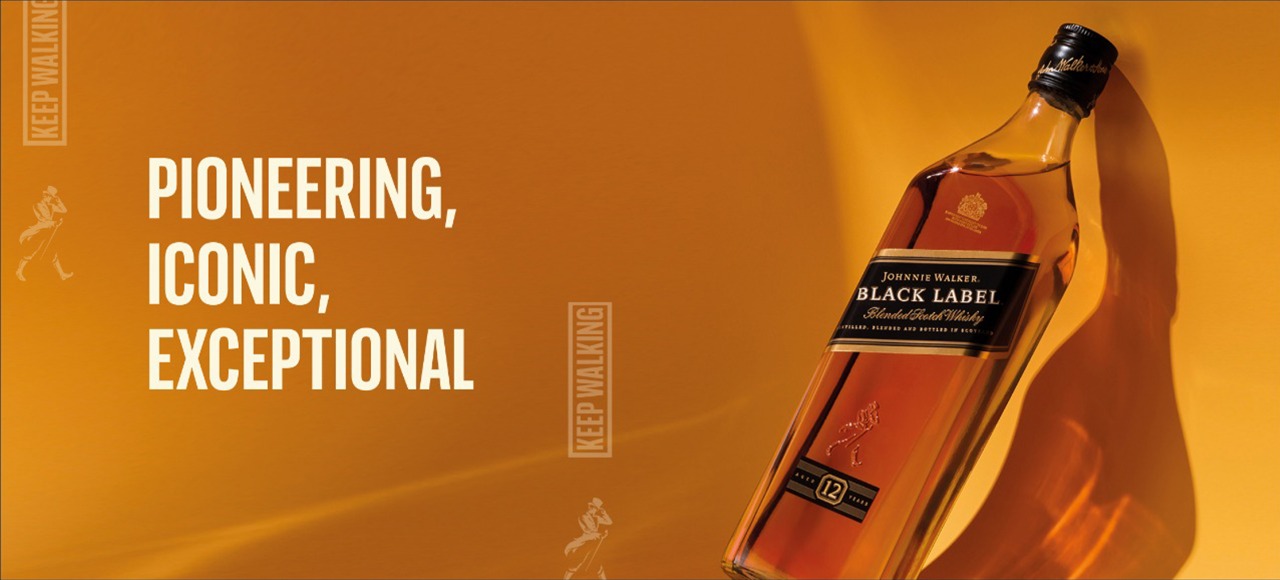
In 1867, John Walker's son Alexander took over the family business, which became John Walker & Sons, and began producing whisky on a larger scale. It is important to note that prior to 1860 it was forbidden to sell blended whisky, i.e. malt and grain mixed together. Following the Spirits Act of that year, which allowed the free trade of alcoholic beverages on a large scale in the UK, Alexander launched Walker's Kilmarnock Whisky, a quality Scotch contained in the square-shaped bottle that would become iconic for the brand.
The choice of such an unusual shape for the time was due to the intention to make the most of the loading surface, and also to increase the strength of the bottles, reducing breakage during transport.
Another characteristic element is the label, affixed obliquely with an expedient that increases the space and thus makes the brand more visible by enlarging the name.
Between 1906 and 1909, George and Alexander II, John's grandsons, further expanded the offer by adding three blends, naming them according to the colour of the label.
Over the years, Johnnie Walker has continued to grow and expand, becoming a global brand. Since 1997, it has been owned by Diageo.
The Johnnie Walker production process begins with the selection of the best malt and grain whiskies from different distilleries in Scotland, which are then blended together to create a unique blend.
Ageing takes place in oak casks for a variable period of time, depending on the type of whisky. The main variants of Johnnie Walker are as follows:
Red Label - A pure malt and grain Scotch, famous for being Winston Churchill's favourite whisky.
Black Label - A scotch of around 40°, aged 12 years.
Blue Label - An exclusive range, where each bottle is numbered and sold in a special box, accompanied by a certificate of authenticity.
Green Label - A blend of four types of malts, from the Talisker, Cragganmore, Linkwood and Caol Ila distilleries, aged 15 years.
Distillates have different alcoholpercentages. So, we have defined a parameter allowing you to better understand and compare different prices. This parameter is calculated by dividing the bottle price by the alcohol content. The alcohol content (or strength) is the amount of pure alcohol (ethanol) contained in the distillate.
This parameter indicates the price of a single 4cl dosage of distillate. It is calculated by dividing the price of the bottle by its quantity (expressed in cl), then multiplying by the centilitres of the recommended single dose, as average in cocktail recipes.