Late nineteenth century. British high society finds itself among the magnificent salons of the restaurant of Federico Peliti (Piedmontese sculptor, photographer, confectioner and entrepreneur) to admire the splendor of its gastronomic compositions and to sip the drink that made it famous in two continents: its vermouth.
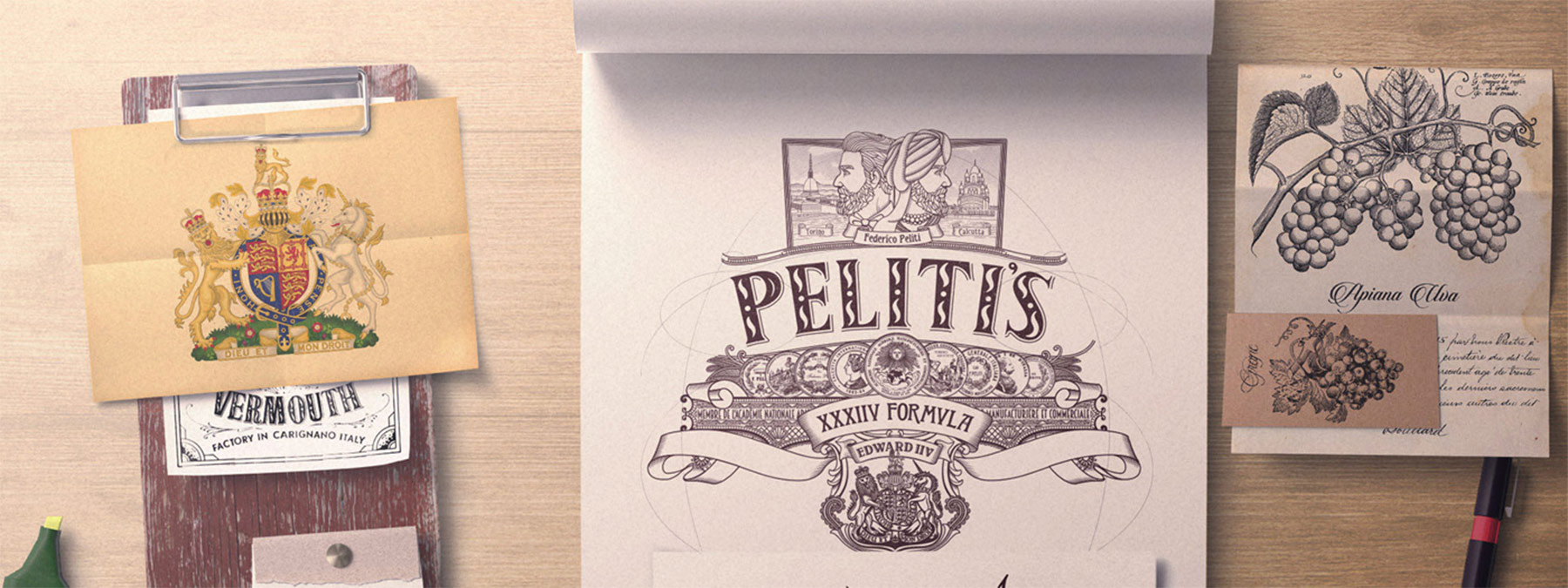
Since 1877, the Vermouth Peliti is produced at the specific request of the Prince of Wales Edward VII and has been awarded with lots of medals at the international exhibitions in Turin, Paris and Calcutta.
The secret of this success lies in the composition of its formula, in the harmonious mix of Indian spices and Piedmontese flowers, in the bitter notes of the assenti and in the soft sweetness of Monferrato passito muscat. A taste that is the mirror of his years, the synthesis of the exotic and of tradition, the manifesto of a Belle Époque whose wave of progress and magnificence will inevitably break into the harsh reality of world conflicts.
At the end of the war the name of Peliti will also be forgotten, but today, after more than a century, we have revived the myth through its original recipes, left unchanged, to return all the character of its time.
Distillates have different alcoholpercentages. So, we have defined a parameter allowing you to better understand and compare different prices. This parameter is calculated by dividing the bottle price by the alcohol content. The alcohol content (or strength) is the amount of pure alcohol (ethanol) contained in the distillate.
This parameter indicates the price of a single 4cl dosage of distillate. It is calculated by dividing the price of the bottle by its quantity (expressed in cl), then multiplying by the centilitres of the recommended single dose, as average in cocktail recipes.