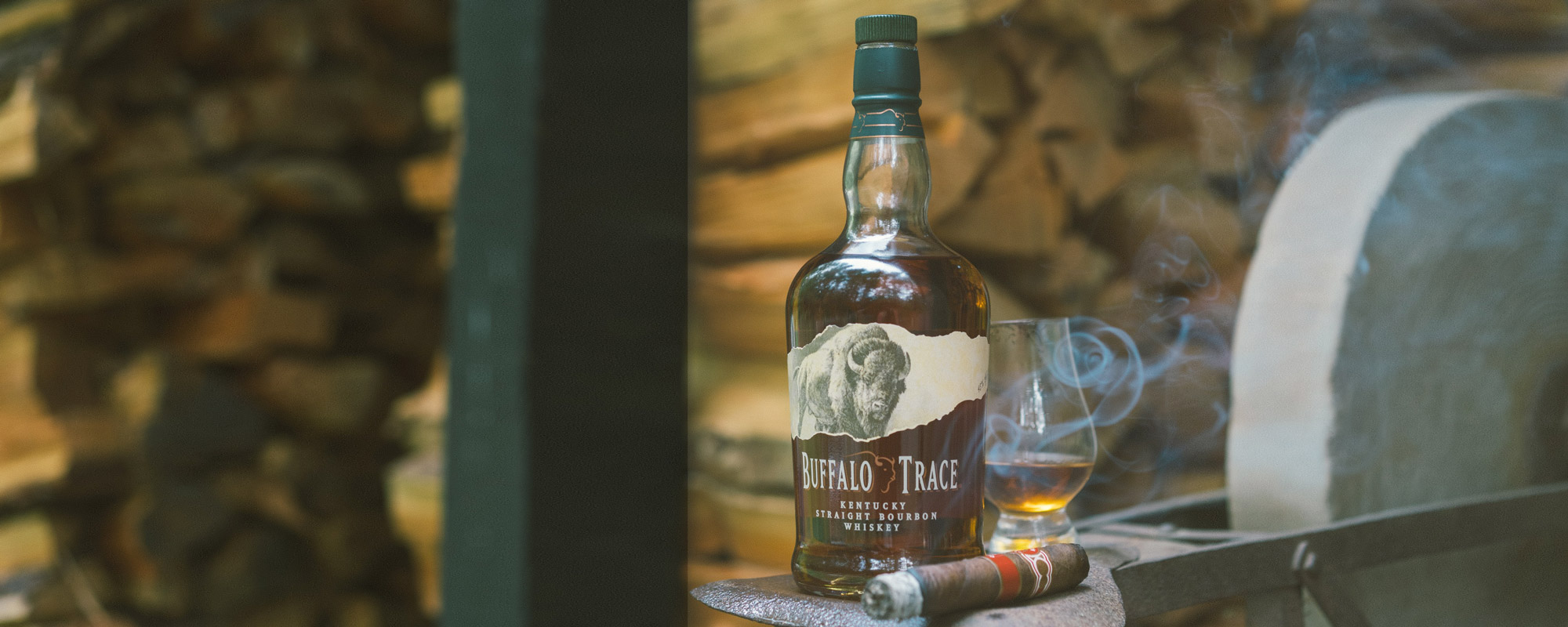
As is often the case in the world of distilled spirits,Bourbon also has a history whose origins are rooted in myth, although it can be universally said that its birthplace is Kentucky, where production began in 1774.
After the mid-18th century, Scottish, Irish and probably also English and Welsh settlers in the Kentucky region began cultivating and distilling, attempting to replicate the spirits they produced in their home countries.
There is no official inventor of Bourbon, although many sources attribute its paternity to the Reverend Elijah Craig, who like many people of the time produced his own distillate at home.
Legend has it that an accidental fire burnt the wooden barrels in which he stored his homemade schnapps; however, in order not to throw anything away, Craig conducted an experiment, discovering that the charred barrels gave an unprecedented and extraordinary flavour to the stored liquid.
Another version has it that the Reverend charred some barrels in which he stored fish to remove the typical rancid smell, and then used them to store brandy.
More prosaically, some scholars have speculated that, as peat was not available in the United States, distillers looked for other ways to reproduce a similar smoking.
There is no unanimous agreement on the name either: the most popular hypothesis is that, at the end of the War of Independence from Great Britain, which was also won thanks to the French army, it was decided to pay homage to France by giving the local version of whiskey a name taken from the royal family of the Bourbons. It was they who held the main southern states, and they also named the Bourbon County. According to historian Michael Veach, however, the name was derived from Bourbon Street in New Orleans, from whose port shipments of Kentucky whiskey, hailed as a cheap alternative to French cognac, were sold.
Bourbon can legally be distilled throughout the United States, but its production takes place in six states: California, Illinois, Pennsylvania, Indiana, Georgia and especially Kentucky, where historically the vast majority of dedicated distilleries are concentrated - as much as 95%.

Cereals, water and yeast: these are the three basic ingredients from which whisky and whiskey are made, with some rather significant differences.
Bourbon uses mashbill, a mixture of cereals which always varies from distillery to distillery and from reference to reference, but in which at least 51% must be maize, which provides sweetness. The rest is usually rye - for spicy notes - or wheat - for sourness, with about 10% barley malt, needed to convert starches into sugars.
A typical mashbill, for example, may be 75% maize, 18% rye, 7% malt.
The Kentucky water, which is very plentiful, has lime origins and is excellent for fermentation.
Theyeast used is almost always a strain selected by the early distillers, which is propagated directly and largely stored in a refrigerated place.

After milling and mashing, fermentation takes place, in which the resulting wort is pumped into the vats without filtering, with the addition of yeast.
In Bourbon, the ancient technique of sour-mash is used: that is, set-back or backset, obtained from the waste components of previous distillations, is added to the wort and yeast. This provides a natural defence against bacteria and guarantees stability and complexity. This technique is especially useful in warmer climate zones - in Scotland, for example, there is no need for it.
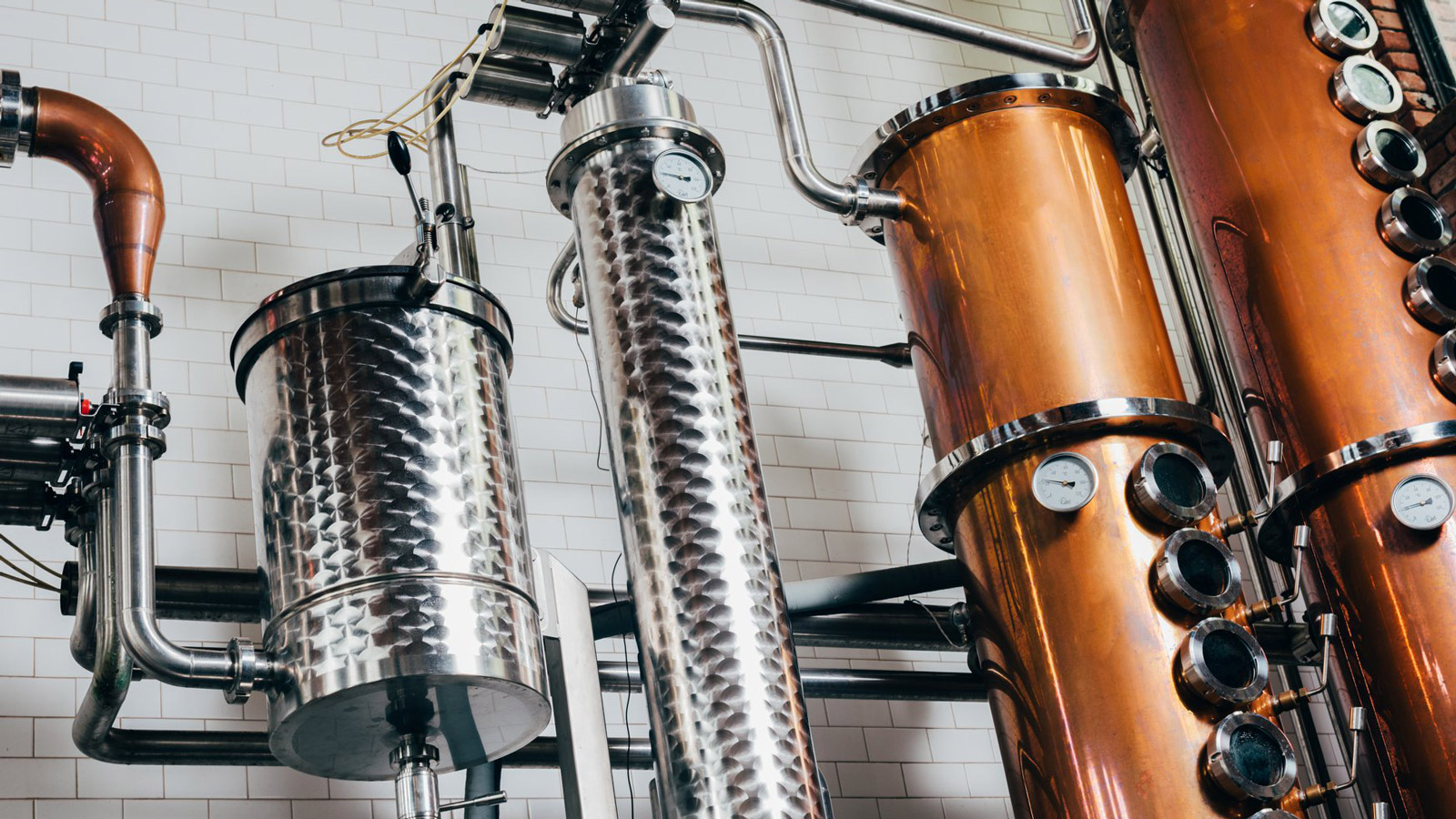
The distillation carried out is normally double: the first time in a beer still column, the second in a pot still doubler. According to the Bourbon specifications, the new make produced in this way may not exceed 160 proof strength (80% ABV).

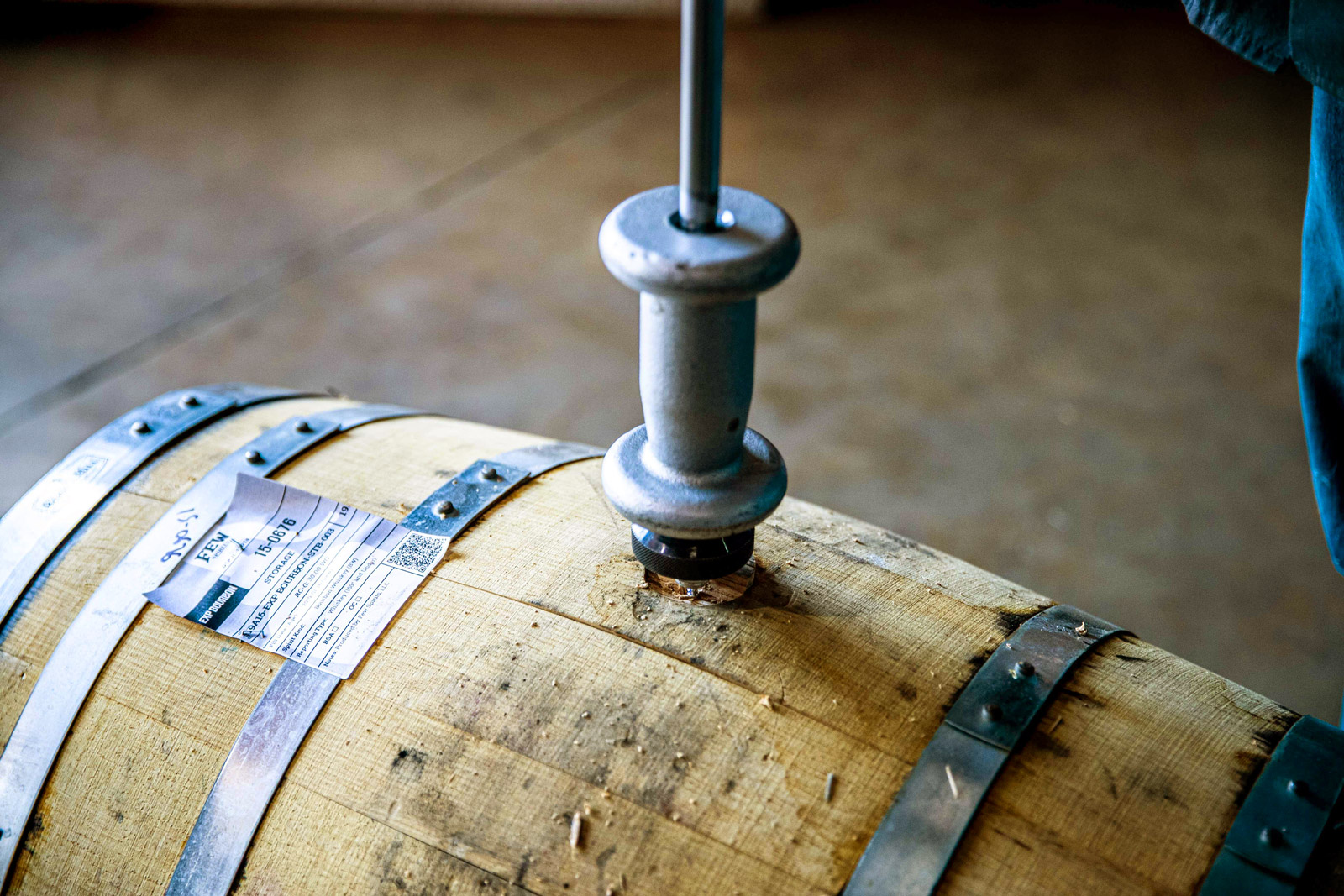
The specification also states that the distillate must be matured in a charred virgin oak cask - which can therefore only be used once, and which is then normally shipped to Scotland for further use.
Filling must take place at a maximum alcohol content of 125 proof (62.5% ABV).
Bottling must take place at a minimum of 80 proof (40% ABV), the addition of caramel is forbidden, and cold filtration is usually carried out.
In the specifications for the production of Bourbon there is no minimum maturation period, so in theory it is possible to bottle it already after one night in the cask, although usually all Main Bourbons are aged between 4 and 7 years. In Europe, on the other hand, a Bourbon must have been matured for at least 3 years to be called a Bourbon.
Slightly different for Straight Bourbon Whiskey: in its case, the expected ageing time is at least 2 years.
Some large spirits also mature for up to 10 years or more: these are the Ultra Aged Bourbons.

Alongside the historical producers, the United States has experienced a veritable boom of craft distilleries producing Bourbon in the last 20 years: there are currently an estimated 2400 active micro-distilleries.

Distillates have different alcoholpercentages. So, we have defined a parameter allowing you to better understand and compare different prices. This parameter is calculated by dividing the bottle price by the alcohol content. The alcohol content (or strength) is the amount of pure alcohol (ethanol) contained in the distillate.
This parameter indicates the price of a single 4cl dosage of distillate. It is calculated by dividing the price of the bottle by its quantity (expressed in cl), then multiplying by the centilitres of the recommended single dose, as average in cocktail recipes.