The history of the House of Angostura dates back to 1824, when Dr Johann Gottlieb Benjamin Siegert developed an aromatic blend in Venezuela that was destined to become famous throughout the world: Angostura Bitters. Having subsequently moved to Trinidad, the company gradually expanded its operations, becoming one of the symbols of Caribbean production. Today, Angostura is synonymous with quality and stylistic consistency, capable of combining tradition and innovation whilst maintaining a strong connection to its homeland. Over the decades, the brand has built a solid reputation both in the world of mixology and amongst rum connoisseurs.
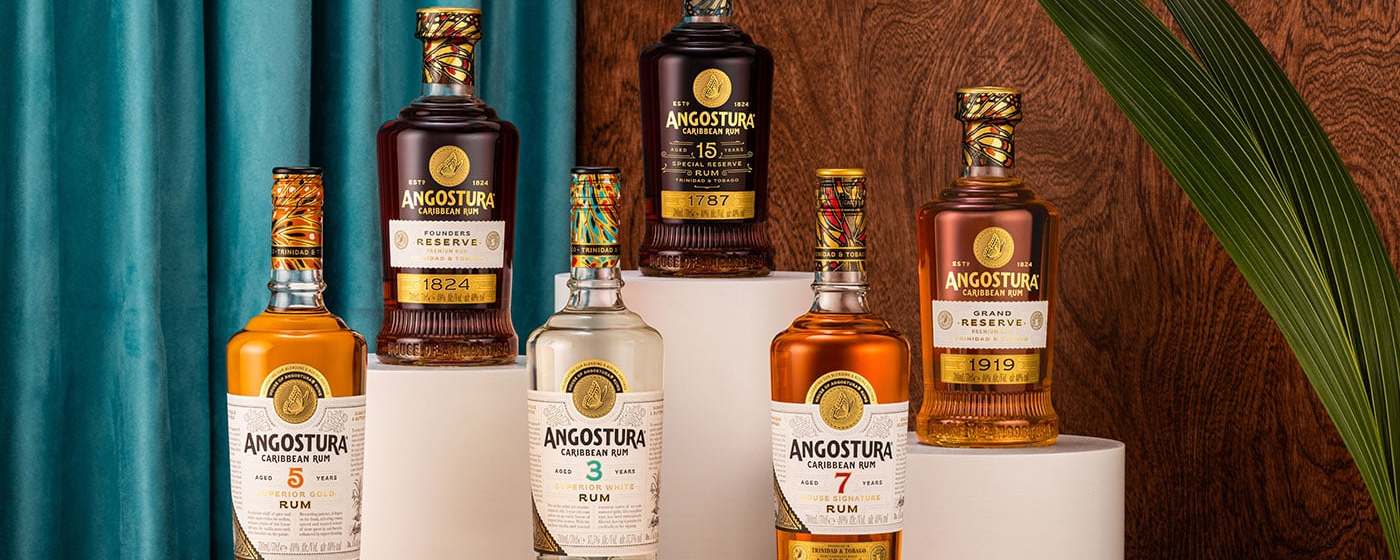
The production of Angostura rum is characterised by direct control over every stage: from fermentation to distillation, right through to tropical ageing in ex-bourbon casks. The distillery primarily uses continuous stills, which produce clean, elegant spirits, perfect for developing a balanced flavour profile during maturation. The core range reflects this philosophy: it starts with younger, more versatile rums such as the 3-year-old and 5-year-old, ideal for mixing, and moves on to more structured expressions such as the 7-year-old, the 1919 and the 1824, culminating in super-premium blends such as the 1787. A comprehensive range, designed to suit every occasion, from contemporary cocktail culture to more discerning tasting.
Angostura Aromatic Bitters is undoubtedly one of the most iconic ingredients in the history of mixology, a product that has helped define the very concept of the modern cocktail. Created by Johann Gottlieb Benjamin Siegert and still produced today by the House of Angostura according to a secret recipe, this bitter concentrates a complex aromatic profile of spices, herbs and citrus peel into just a few drops. Its use is extremely versatile: it is a key ingredient in great classics such as the Old Fashioned and the Manhattan, but also features in contemporary drinks, where it is used to add depth, balance sweetness or enhance aromatic components. And it’s not just for cocktails: a few drops can also transform soft drinks, sodas or culinary preparations, making it a true liquid ‘seasoning’ for bartenders and enthusiasts alike.
Distillates have different alcoholpercentages. So, we have defined a parameter allowing you to better understand and compare different prices. This parameter is calculated by dividing the bottle price by the alcohol content. The alcohol content (or strength) is the amount of pure alcohol (ethanol) contained in the distillate.
This parameter indicates the price of a single 4cl dosage of distillate. It is calculated by dividing the price of the bottle by its quantity (expressed in cl), then multiplying by the centilitres of the recommended single dose, as average in cocktail recipes.