The story of Silent Pool Distillers began in 2013, thanks to a group of friends led by Ian McCulloch, who got together with the common goal of crafting a new London Dry Gin inspired by the beauty of the English countryside.
The choice fell on an evocative location whose origins date back to the last Ice Age: the natural spring-fed Silent Pool nestled in the hills of Surrey.
Its crystal-clear water is naturally filtered by rainwater passing through a bed of chalk, which purifies it and gives it a typical teal colour - a characteristic that has given rise to numerous legends over the centuries.
The oldest dates back to the beginning of the 13th century and tells the tragic story of young Emma who drowned in the pond one day to escape an attack by a knight. Her ghost has haunted the area ever since.
After transforming the ruins of the Duke of Northumberland's Albury estate into a state-of-the-art distillery, then, Silent Pool was officially born in 2015.

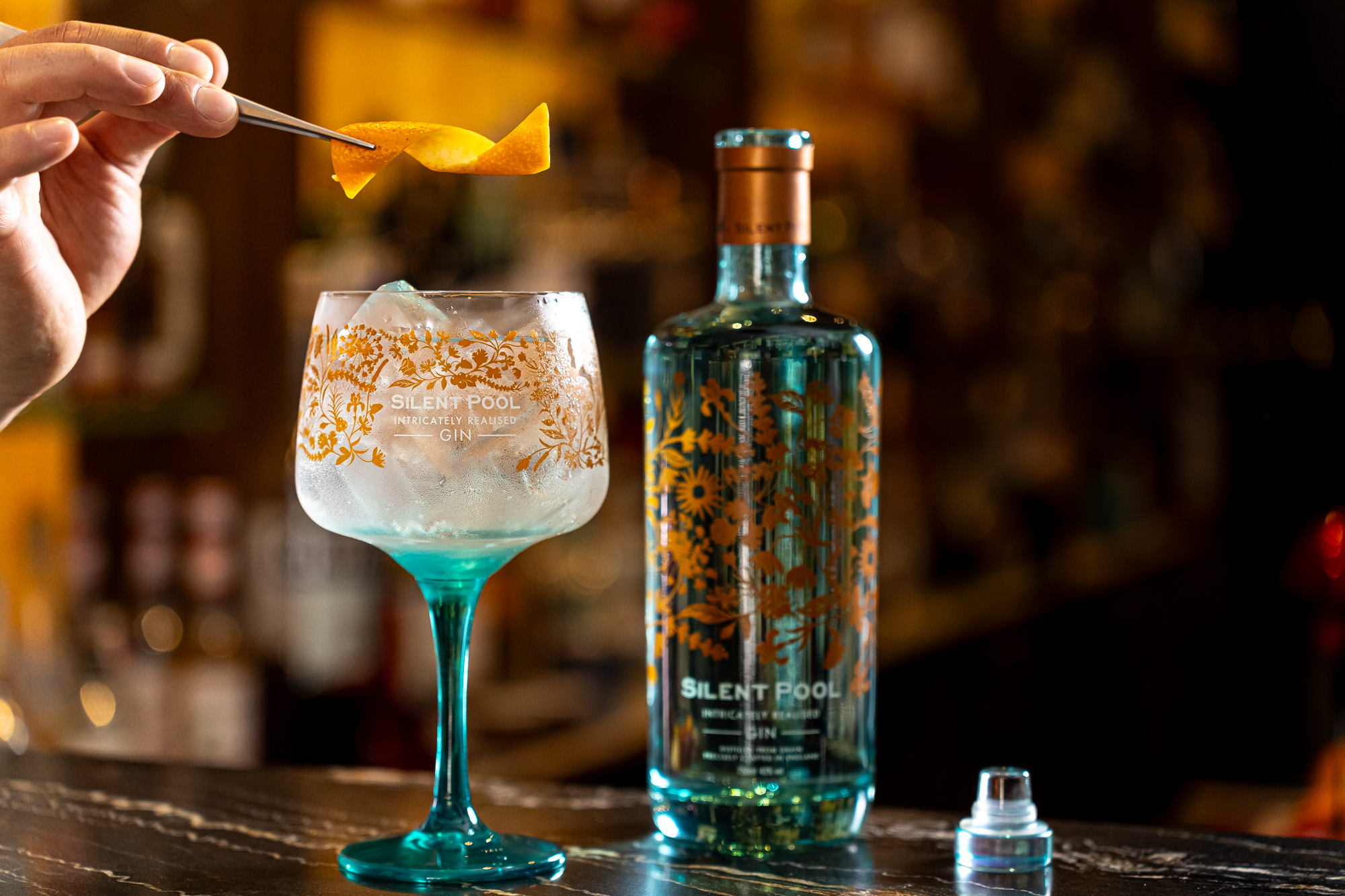
Silent Pool Distillers sources most of its ingredients locally, and continues its research process to create a unique ultra premium gin that tells us about a region and its essence.
The process that leads to the creation of Silent Pool Gin is divided into 4 main stages.
- The maceration of the herbaceous botanicals: the bitterest botanicals are soaked for 24 hours in a tank with neutral grain spirit and water. These include, among others, coriander seeds, cardamom, cubebe, bitter orange peel, juniper from Serbia, angelica and liquorice root.
- The floral and volatile botanicals, on the other hand, are soaked for 24 hours in a smaller tank. Among the known components are lavender, rose, elderberry and camomile.
- Before distillation, a basket with fresh botanicals (orange and lime peel, dried pear, juniper from North Macedonia among others) is added to the top of the still: during distillation, the steam from the escaping alcohol passes through the botanicals, which add character to the gin.
- Customised hybrid stills allow for a perfect balance. Before the distillation process begins, however, 3 more botanicals are added directly: these are bergamot, fresh pear and, above all, locally sourced honey, one of the most distinctive elements of Silent Pool gin.
The result of this painstaking production process is a robust and nuanced gin with a great depth of flavour dominated by floral, juniper and herbal hints, with a finish dominated by the round sweetness of pear and honey. An aromatic richness that makes it particularly suitable for the preparation of a wide range of classy cocktails.
Even the packaging reflects the great attention to detail: the aqua-green shade of the bottle evokes the extraordinary colour of Silent Pool, and its handcrafted copper motifs depicting botanical illustrations recall ancient legends about this magical place.

Ingredients:
50 ml Silent Pool Gin
150 ml Premium Indian Tonic
Orange wedge
Pour 50 ml Silent Pool Gin into a Silent Pool Gin copa glass filled with ice, fill with 150 ml Premium Indian Tonic.
Garnish with an orange wedge.

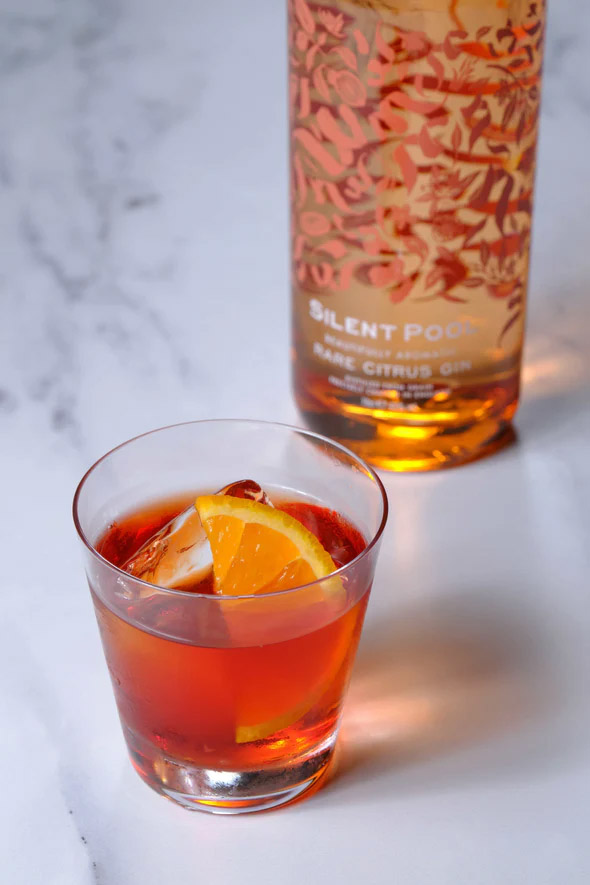
A sweet and spicy twist on the great classic, with great elegance and a long, fruity finish.
Ingredients:
25ml Silent Pool Rare Citrus Gin
25ml Vermouth
25ml Campari
Orange zest
Mix all ingredients with ice and pour into a rocks glass. Garnish with an orange peel or orange wedge.
Ingredients:
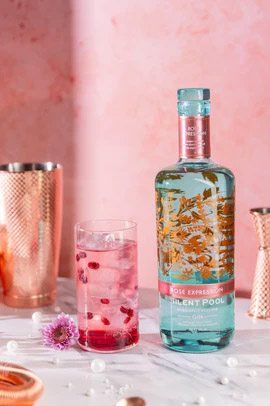
50ml Silent Pool Rose Expression Gin
150ml Tonic Water
15ml Grenadine
Pomegranate seeds
Pour the grenadine into a highball glass and add ice. Add Silent Pool Rose Expression Gin and some pomegranate seeds, then slowly pour in the tonic water, gradually adding more pomegranate seeds to layer over the grenadine at the bottom of the glass.
Garnish with pomegranate seeds.
Distillates have different alcoholpercentages. So, we have defined a parameter allowing you to better understand and compare different prices. This parameter is calculated by dividing the bottle price by the alcohol content. The alcohol content (or strength) is the amount of pure alcohol (ethanol) contained in the distillate.
This parameter indicates the price of a single 4cl dosage of distillate. It is calculated by dividing the price of the bottle by its quantity (expressed in cl), then multiplying by the centilitres of the recommended single dose, as average in cocktail recipes.