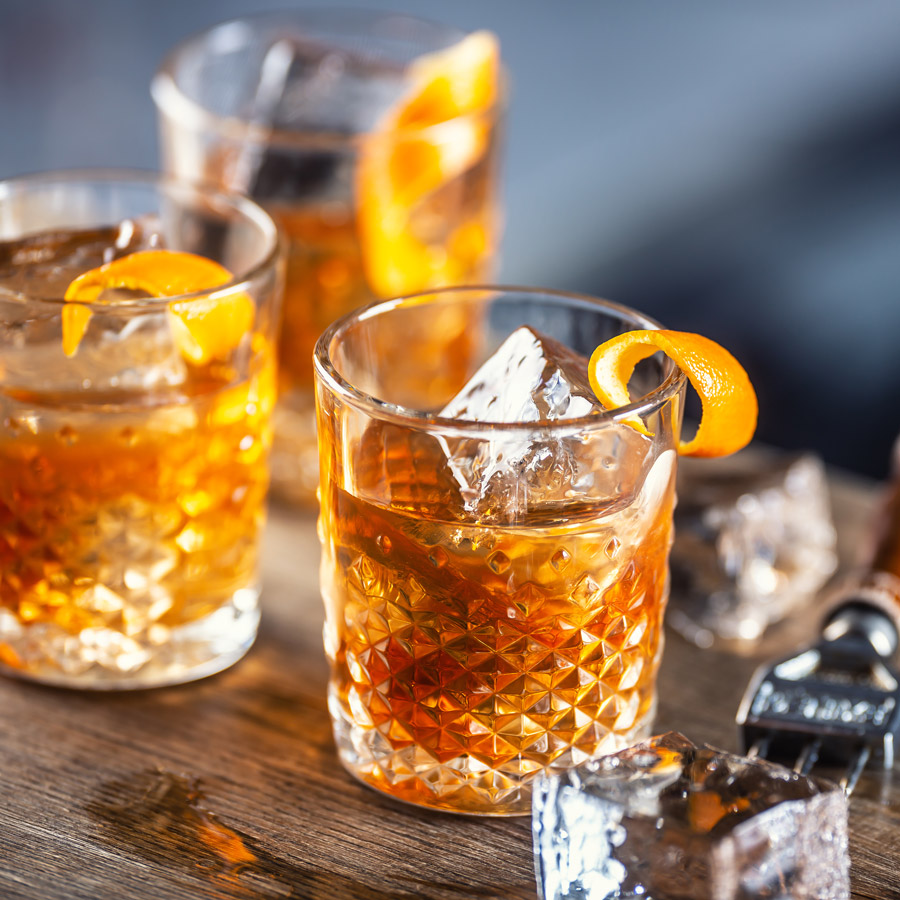
Its birth is lost in the mists of time, in the mid-1800s when the first cocktails were born. It was the time of Professor Jerry Thomas, the Auguste Escoffier of mixology, the first to codify the recipes in 1862 and to put them down on paper in a book that is still the bible of all bartenders: the "Jerry Thomas bartender guide, how to mix drinks, a bonvivant's companion".
The original recipe was inspired by the Whiskey cocktail, and from this recipe were born countless "twists" that have allowed the Old Fashioned to become a cornerstone of the modern culture of drinking cocktails. With the rediscovery of classic drinks at the end of the millennium, the Old Fashioned has won the hearts of consumers to such an extent that it is now one of the most popular cocktails in the world. And all this despite having been created at the end of the 1800s! This is further proof of a great truth: the classics never die.

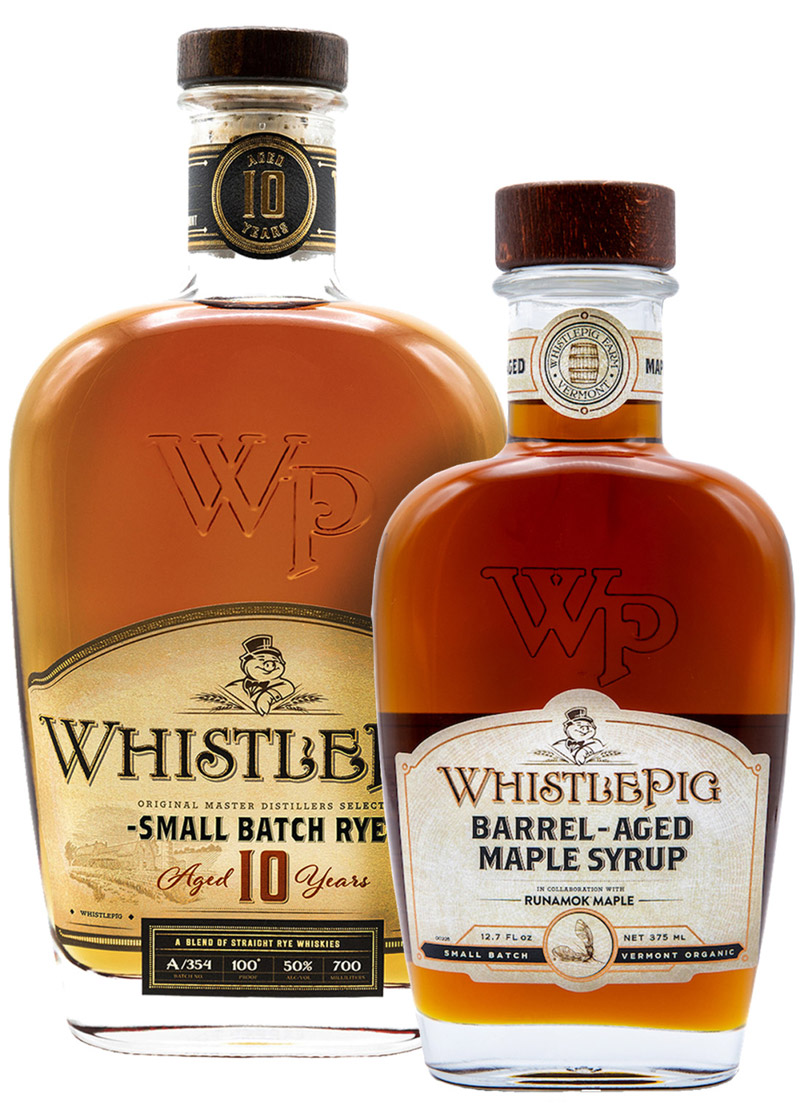
A reinterpretation of the famous Old Fashioned in this version with WhistlePig maple syrup aged in Whiskey barrels.
The Maple Old Fashioned is simple and delicious, a nod to a classic with a Vermont twist.
When Barrel-Aged maple syrup is added, the result is a cocktail perfectly balanced between strength and sweetness.
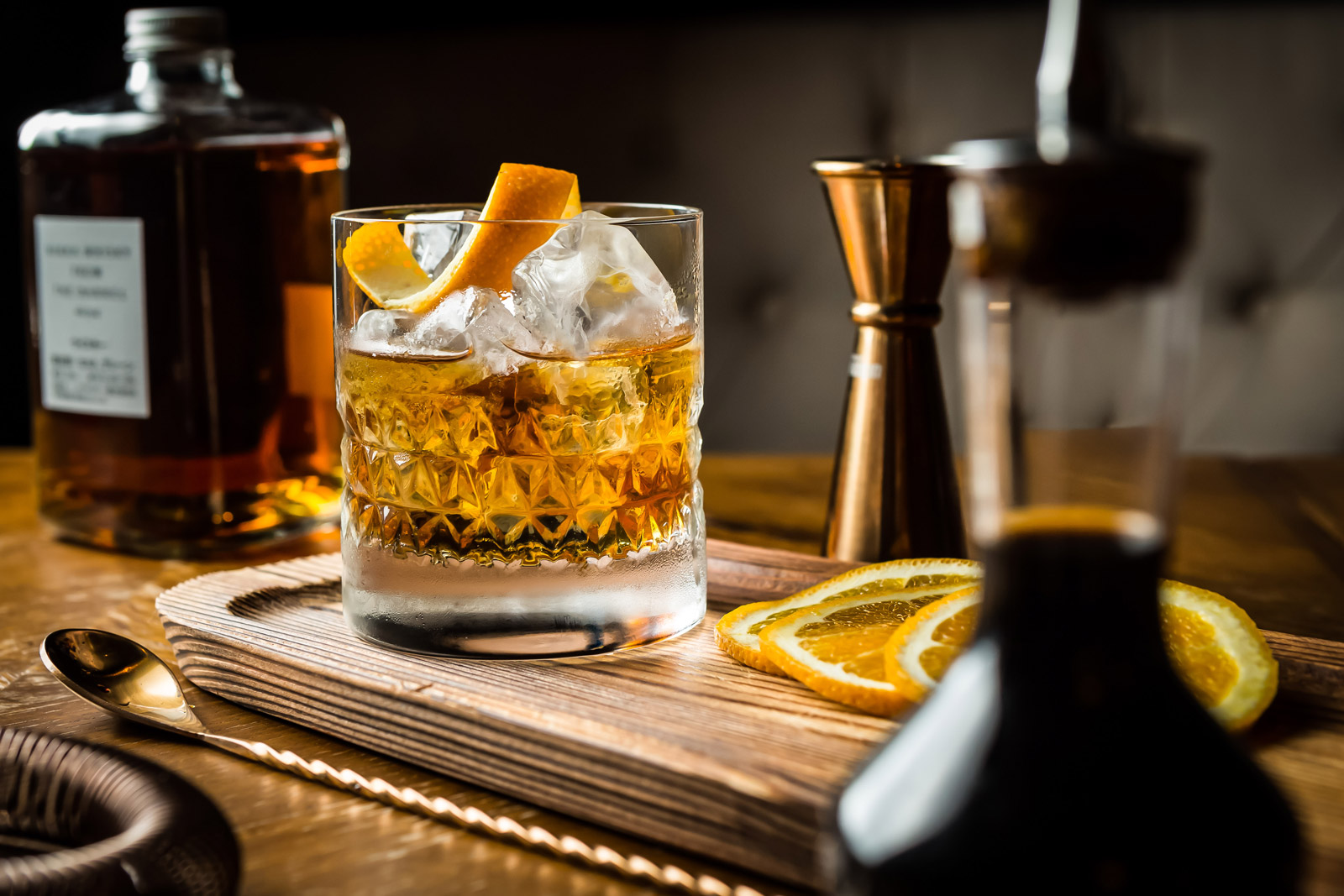
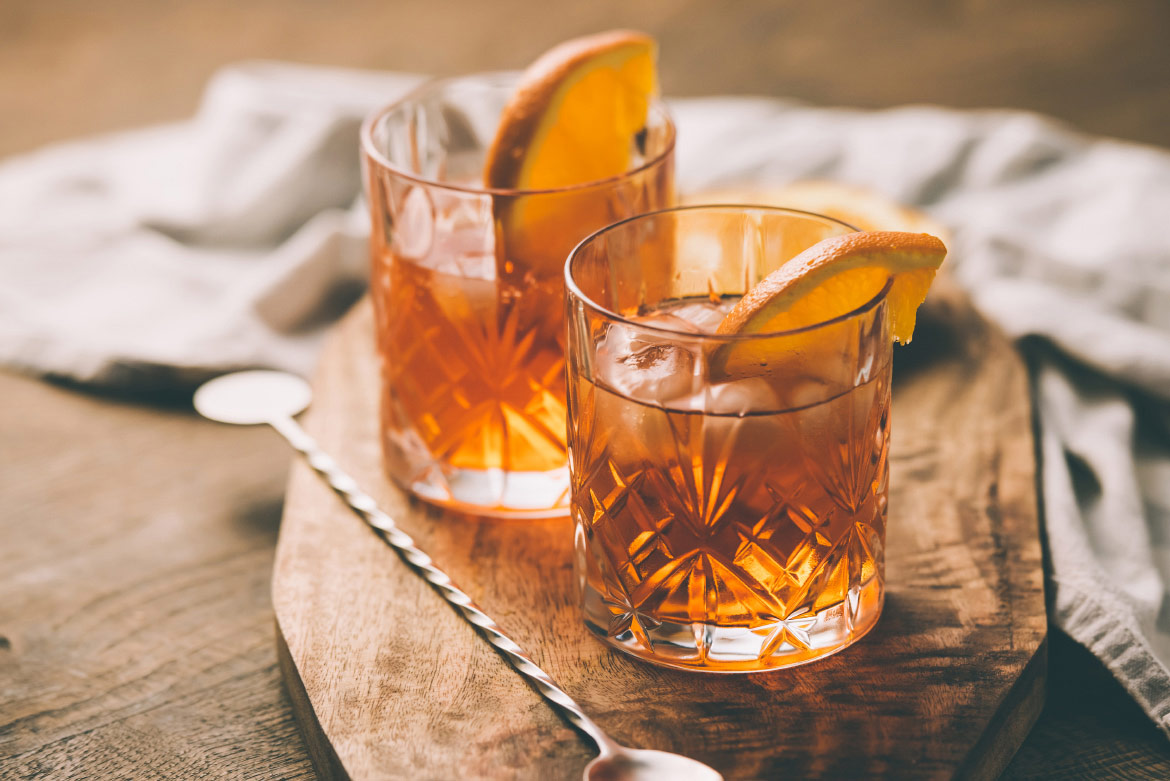
The classic recipe, simple and no-frills, we propose here with a Kentucky Bourbon Whiskey of great quality and structure as the one produced by Michter's. The recipe is simple but not trivial.
The recipe is simple but not trivial, the secret lies in the dilution and obviously everyone must find the balance that satisfies personal taste.
- Equip yourself with an old fashioned glass or low tumbler.
- Pour in 3 or 4 drops of The Bitter Truth (or Bogard's) aromatic bitter.
- Add a teaspoon of brown sugar syrup
- Pour in 50 ml of Michter's US n1 Kentucky Straight Bourbon Whiskey
- Mix ingredients together and begin adding ice while continuing to mix
- Continue adding ice and stirring until your desired dilution is achieved
- Garnish with lemon and orange peel
It's been a trend, and perhaps it's not even correct to call it old fashioned, but the fact remains that for twenty years quite a few bartenders liked to massage the fruit together with the sugar, at the bottom of the glass, in order to extract a slight sugary part and slightly accelerate the sugar's melting. It's also a fresher, more spring-like recipe.
- Pour 3 or 4 drops of The Bitter Truth (or Bogard's) aromatic bitters into an old fashioned or low tumbler glass.
- Add a teaspoon of brown sugar syrup or granulated cane sugar
- Place an orange slice and half a lemon wedge in the glass along with a cocktail cherry
- Massage the ingredients together with a cocktail pestle or the pestle at the end of the bar spoon to obtain the required proportion of juices
- Pour in 50ml of Buffalo Trace Bourbon Whiskey
Achieving the perfect dilution requires patience and often we don't have the time or inclination because we want to sip a good old fashioned in the shortest possible time. This is where the Lazy Old fashioned comes to our rescue, a version where a small addition of natural water or soda helps both to speed up the dissolving of the sugar and to speed up the dilution process, avoiding the need to swirl the bar spoon in the glass filled with ice for several minutes.
- Pour 3 or 4 drops of The Bitter Truth (or Bogard's) aromatic bitters into an old fashioned or low tumbler glass.
- Add a teaspoon of brown sugar syrup
- Pour in 1/2 teaspoon of still or soda water
- Pour in 50ml Monkey Shoulder blended scotch whisky
- Mix ingredients together
- Fill with ice and mix for a few more seconds and garnish

Distillates have different alcoholpercentages. So, we have defined a parameter allowing you to better understand and compare different prices. This parameter is calculated by dividing the bottle price by the alcohol content. The alcohol content (or strength) is the amount of pure alcohol (ethanol) contained in the distillate.
This parameter indicates the price of a single 4cl dosage of distillate. It is calculated by dividing the price of the bottle by its quantity (expressed in cl), then multiplying by the centilitres of the recommended single dose, as average in cocktail recipes.