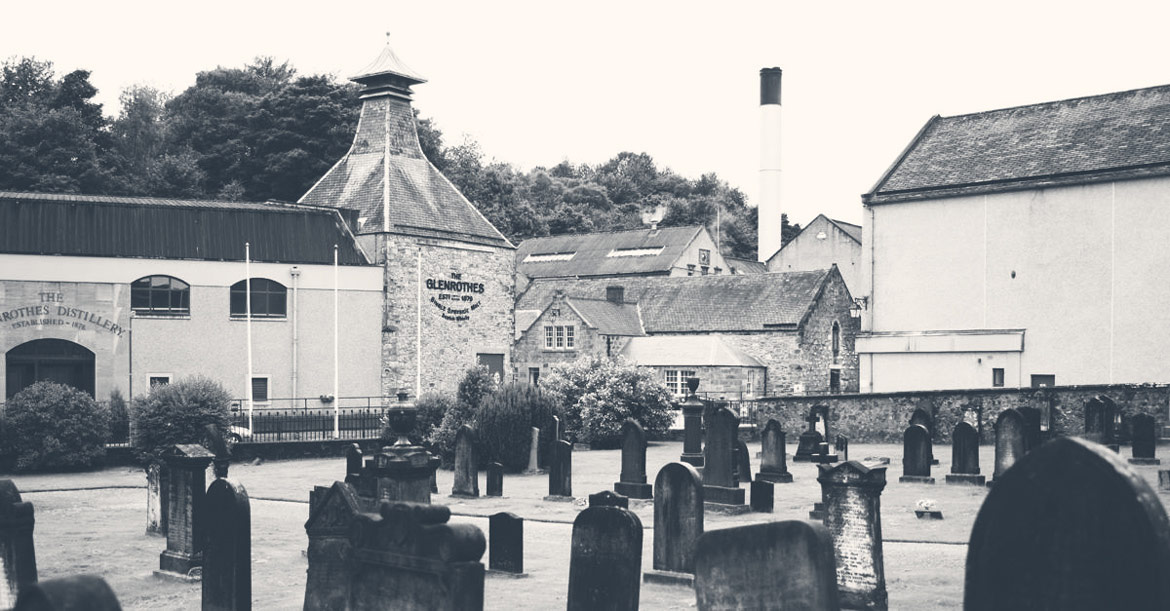
Glenrothes is a historic distillery in Scottish Speyside, founded in the town of Rothes back in 1878. The distillery is part of the same family as Macallan and Highland Park, two prestigious companies under the Edrington Group umbrella, and with its 10 stills is able to produce up to 5.6 million litres of new make spirit per year. Only a fraction of what is distilled ends up in the bottle as Single Malt because Glenrothes, with its pronounced personality, has always been a key element of the famous blended Cutty Sark and The Famous Grouse. Tasting Glenrothes in its pure form is therefore an exclusive pleasure for those who enjoy a robust and assertive style of Scotch.

The traditional building is also fascinating because right next to it is a Celtic cemetery with curious characteristics: the gravestones are completely blackened by the Baudoinia Compniacensis fungus, which is very fond of ethanol and from the cellars of Glenrothes found fertile ground to infest the nearby cemetery.

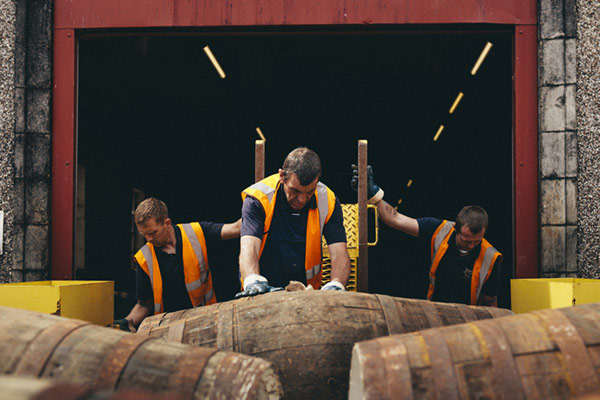
Glenrothes is one of the few distilleries to still have an in-house cooperage with coopers who treat, dismantle and reassemble around 6,000 casks a year, most of which have obviously previously contained Sherry wine.
Each barrel has its own history and unique destiny, and it is up to the sensitivity of the men to understand when to replace a barrel head or a stave, or simply to retire an exhausted Butt after years of honourable service.
This type of activity is now outsourced by almost all distilleries, which rely on large cask treatment centres and in this way optimise resources. However, cooperage ownership adds quality to the work of a distillery as historic as Glenrothes, as well as keeping alive a centuries-old know-how.
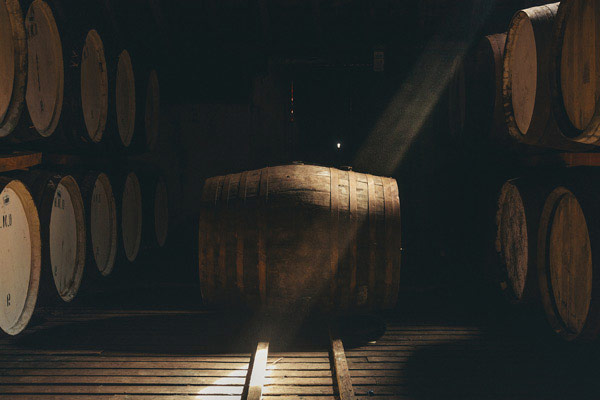
The Glenrothes distillery has always intended the distillate that would become a Single Malt to be matured mainly in ex-Sherry casks. However, traditional Solera casks have now become a rare commodity, leading the Scottish distilleries to "condition" new casks in Spain, often made of American, French or European oak.
An exception to this method is Glenrothes, which is still able to source Galician oak casks through an agreement with Toneleria Tevasa, which has become uncommon due to national restrictions on the cutting of Spanish oak. These casks are a perfect match for a malty, angular distillate like Glenrothes, enriching it with vinous notes and subtle tannins.
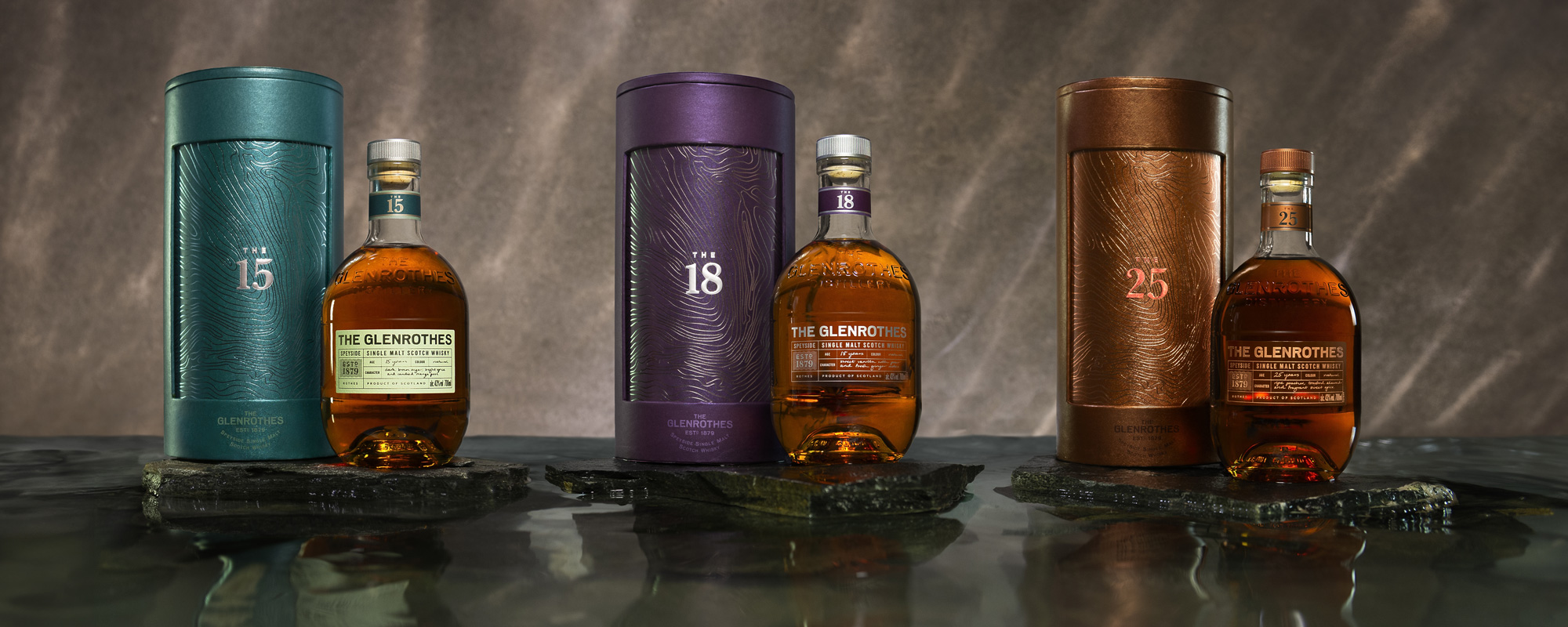
The new Glenrothes range highlights the identity of the Speyside distillery through expressions defined by cask type and ageing. Each release comes from a careful selection of single malts matured predominantly in European and American ex-Sherry oak casks, with the aim of emphasising fruity and spicy notes in a balanced structure. A collection designed to offer a precise overview of the Glenrothes style.

Distillates have different alcoholpercentages. So, we have defined a parameter allowing you to better understand and compare different prices. This parameter is calculated by dividing the bottle price by the alcohol content. The alcohol content (or strength) is the amount of pure alcohol (ethanol) contained in the distillate.
This parameter indicates the price of a single 4cl dosage of distillate. It is calculated by dividing the price of the bottle by its quantity (expressed in cl), then multiplying by the centilitres of the recommended single dose, as average in cocktail recipes.