Who was born first, Scotch whiskey or Irish whiskey? We will probably never know the answer, and in the end it is not even of fundamental importance.
What interests us here is to talk about the many characteristics that make Irish whiskey unmistakable.
The differences, apart from the name, begin with the raw material. In Ireland historically, unmalted barley can be used in addition to wheat, rye, oats and maize - this makes the whiskey fresher and softer than in Scotland. The oats, when present, are crushed rather than ground: at the end of the brew the wort is passed through the skins to the bottom of the vat for a more intense flavour.
Both blended and single malts are produced in Ireland, but the typical Irish whiskey is Pot Still Irish Whiskey, made from a blend of unmalted and malted barley, both of which are present at a minimum of 30%.

Also widespread is triple distillation, which has now almost completely disappeared in Scotland. Distilling often means purifying, and so an extra cycle of distillation leads to a 'white' distillate that is edgeless and elegant.
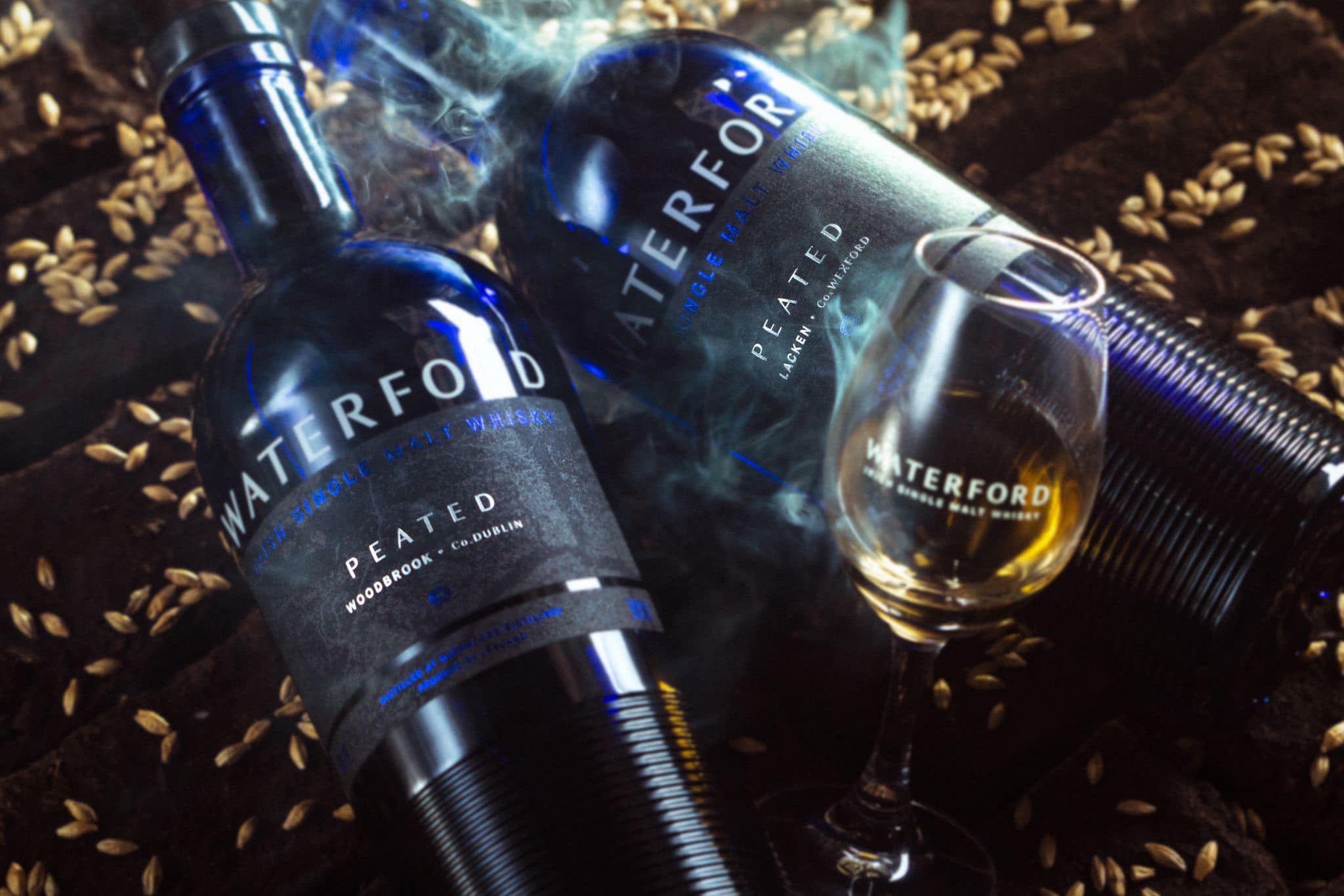
Peat is present in Ireland as it is in Scotland, and not everyone knows that until the early 1900s many Irish whiskeys contained malted barley with peat smoke.
Over the years this technique was lost and today there are very few peat-smoked Irish whiskeys.
However, a new generation of distillers has blossomed in Ireland, with the number of distilleries increasing from less than 10 to 40 within a decade. Distilleries that are often artisanal, capable of recovering traditions but also innovating, yet all oriented towards quality rather than quantity.
Since 2015, a unique distillery has been operating in the town of Waterford, South-East Ireland. The Waterford Distillery was founded in a former industrial complex, once a Guinness brewing plant, which was completely renovated in 2003 and closed after only ten years. The body is therefore that of an ultra-modern plant, light years away from the idea of the traditional distillery of the past, but the beating heart is animated by a philosophy decades ahead of its time when it comes to craftsmanship and attention to detail.
The concept behind the Waterford project is as simple as it is revolutionary: to produce a raw material-oriented whisky that is all about measuring the influence of terroir. Waterford therefore bottles mostly Single Farm Whiskies, derived from individual Irish farms, each able - by culture, soil and climate - to produce a barley with unique characteristics. Discover the Waterford range ›
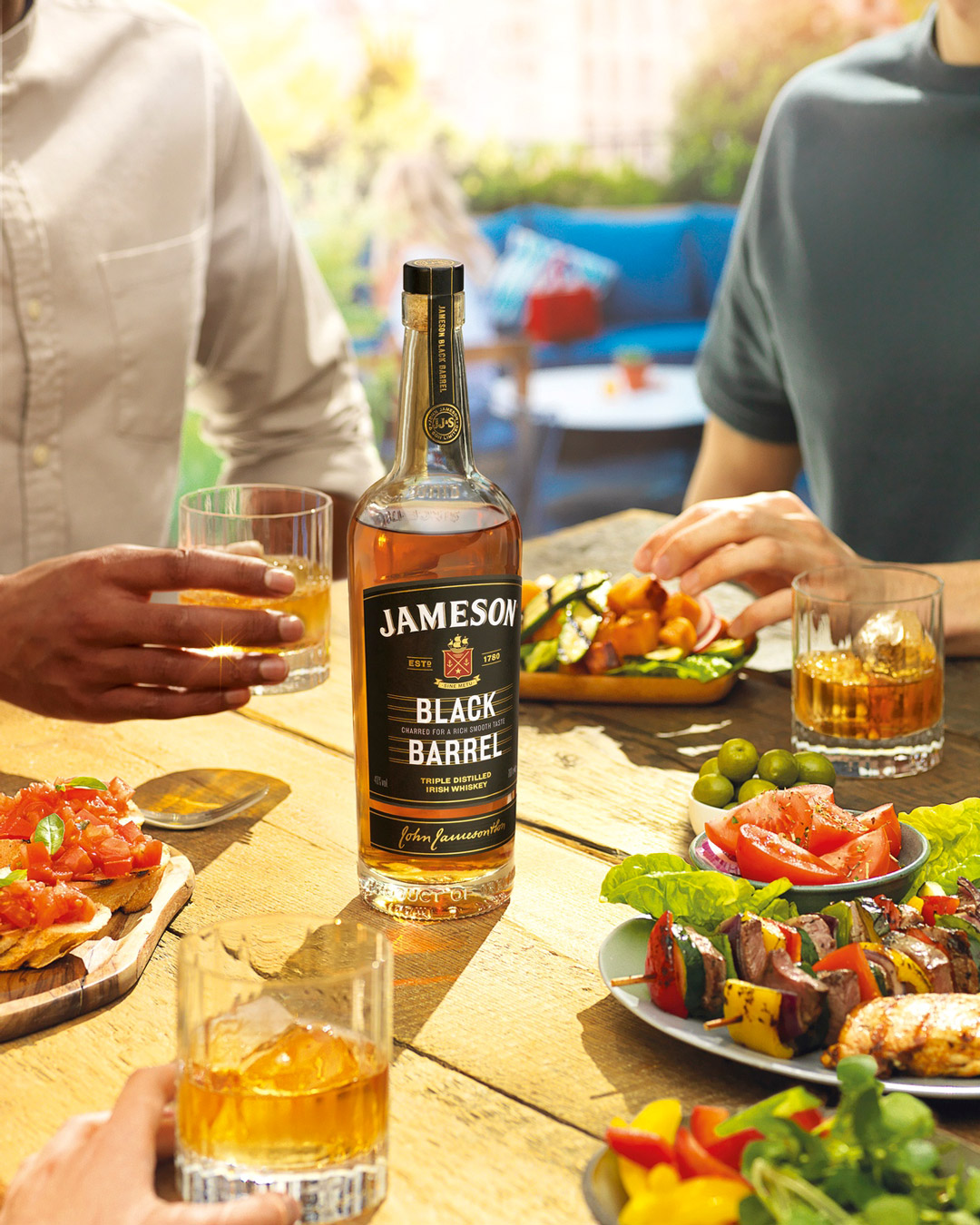
Jameson Black Barrel packs immeasurable richness and complexity into every drop.
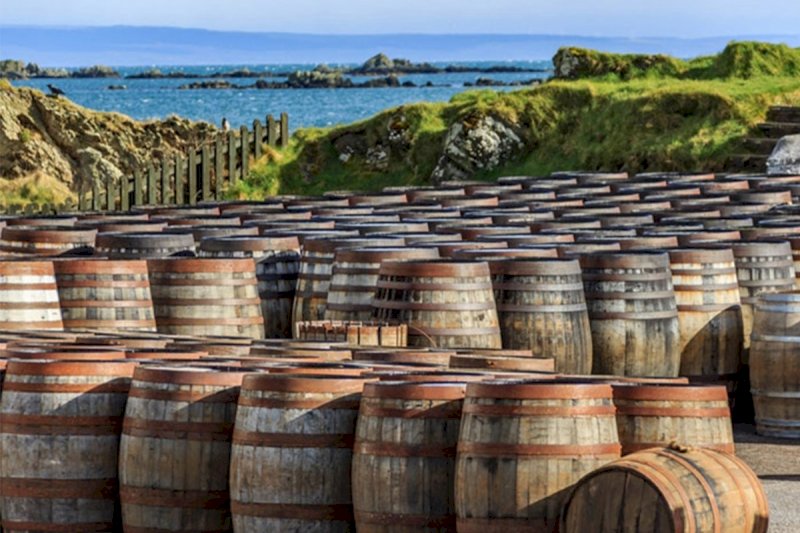
The double charring of the wood ignites the barrels and gives them new life.
Caramel, notes of toasted wood and hazelnut, lingering creaminess and smoothness: Black Barrel pushes the common characteristics of this distillate towards a horizon of experimentation and originality. The result is a not-to-be-missed blended whiskey, ideal to enjoy with friends to discover unique aromas combined with the aromatic intensity of our whiskey aged up to 11 years amidst the notes of bourbon and sherry.
It is perfect on its own or on ice, but is also commonly known as the best whiskey for an Old Fashioned.

Ireland and Scotland have always contended over the paternity of the invention of whisky, however, there are no official documents and we will not go into this centuries-old dispute, but will rely on...
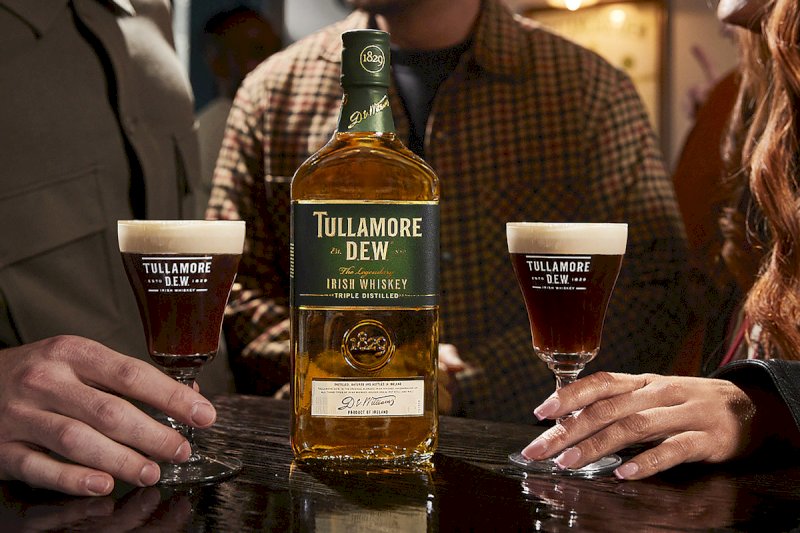
It is the king of hot drinks, and it is perfect for cold winter afternoons: we are talking about Irish Coffee, the world's most famous spiked coffee. Did you know that it was invented in an airport? Let's...

Since 2015, a unique distillery has been operating in the town of Waterford, South East Ireland. The Waterford Distillery was founded in a former industrial complex, once a Guinness brewery, which was...

Founded in Ireland in 1779, Kinahan’s is a true 'pioneer of Irish whiskey'. Kinahan's revolution was to focus on cask ageing at a time when the spirit was consumed white, under the name poitìn. Loved by...
Distillates have different alcoholpercentages. So, we have defined a parameter allowing you to better understand and compare different prices. This parameter is calculated by dividing the bottle price by the alcohol content. The alcohol content (or strength) is the amount of pure alcohol (ethanol) contained in the distillate.
This parameter indicates the price of a single 4cl dosage of distillate. It is calculated by dividing the price of the bottle by its quantity (expressed in cl), then multiplying by the centilitres of the recommended single dose, as average in cocktail recipes.