Ti potrebbe interessare anche…






Tequila and Mezcal: it all starts with agave
As is well known, the two great spirits typical of Mexico, tequila and mezcal, are both extracted from agave. Agaves are plants native to the American continent, found mainly between Mexico and the southern United States. There are between 150 and 250 varieties, although the exact number is unknown.

Before the arrival of European peoples on the American continent, agaves were used in a wide variety of ways: from the production of textiles to that of tools and building materials; but their rarest and most prized purpose was in the production of medicines and sacred beverages.
In particular, agave juice was fermented to be consumed in a milky, foamy, low-alcohol form as an elixir. Upon their arrival, the Spaniards called it pulque: an Aztec drink at least two thousand years old, which, although not a distillate, can therefore be considered the father of tequila and mezcal.
The agave is a plant species that is at least two million years old. In its evolution, it has developed the ability to thrive in arid and near-desert climates, thanks in part to the accumulation of sugars that contribute to the birth and taste of distillates. But all agaves are not the same: in particular, sugar concentrations are highly variable, depending on environmental conditions, soil composition, air and soil humidity, and temperatures. It is also for this reason that the world of traditional Mexican distillates is a varied and multifaceted universe, starting precisely with the choice of raw material and ending with the different recipes and preparation techniques.

The term 'mezcal' comes from the Aztec language 'mexcalli': metl (agave) and ixcalli (cooked). Historically, it denoted any type of Mexican agave distillate.
Many mistakenly consider mezcal to be tequila with a worm, but this is not the case. Today, the typical agave worm is only included in a few bottles and almost exclusively for marketing purposes.
Tequila is also a distillate of agave (i.e. it is a mezcal) but produced exclusively from Agave Tequilana Weber Azul, and this is the main difference between the two distillates: whereas mezcal can be extracted from more than fifty different species of the plant, tequila is only produced from Agave Azul.
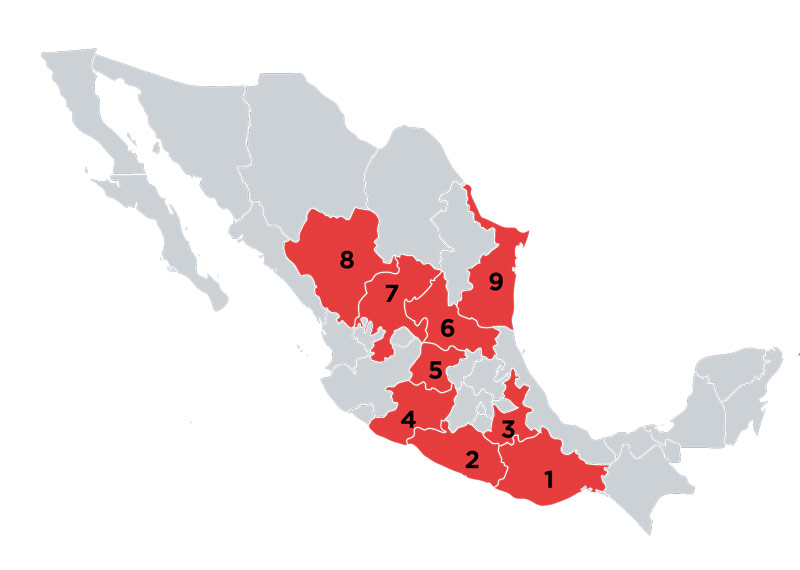
Tequila was marketed from 1880 in Mexico under the name 'Vino Mezcal de Tequila'. The controlled designation of origin for mezcal dates back to 1994, and today defines mezcal as all agave distillates from the states of Oaxaca (1), Guerrero (2), Puebla (3), Michoacan (4), Guanajuato (5), San Luis Potosi (6), Zacatecas (7), Durango (8) and Tamaulipas (9).
Spanish conquistadors started cultivating agave Azul in Jalisco as early as the mid-16th century. Tequila, however, did not become widespread until after the Mexican revolution, when José Cuervo produced the first bottle. Then, from 1900 onwards, tequila production became widespread and industrial.
Tequila thus originated around five hundred years ago in the state of Jalisco. Today, the plains around Guadalajara are full of Azul agave plantations and small and large distilleries. Many of these distilleries are open to the public and sometimes offer guided tours.
The tourism authority of the state of Jalisco has created its own tequila route to discover interesting tequila-related places, all of which can be reached by day trips from Guadalajara.
Mezcal, for its part, has always been produced in a rural and raw way, and was once only intended for consumption within the village where it was produced. This is why mezcal production has long remained more artisanal and limited.
Like grapes for wine: the different types of agave
A first important difference is that between wild and cultivated agave. Wild agaves are the most sought-after, considered to be the ultimate raw material.
Like grapes for wine, agave can be used individually or in combination, whether wild or cultivated. Equally, the region or city of origin is important, as are the places of production
Tequila is produced exclusively in specific areas, such as the states of Michoacán, Guanajuato, Nayarit, Tamaulipas and Jalisco. In contrast, mezcal, being produced throughout Mexico, is sometimes called by other names, such as bacanora in the state of Sonora or sotol in Chihuahua.
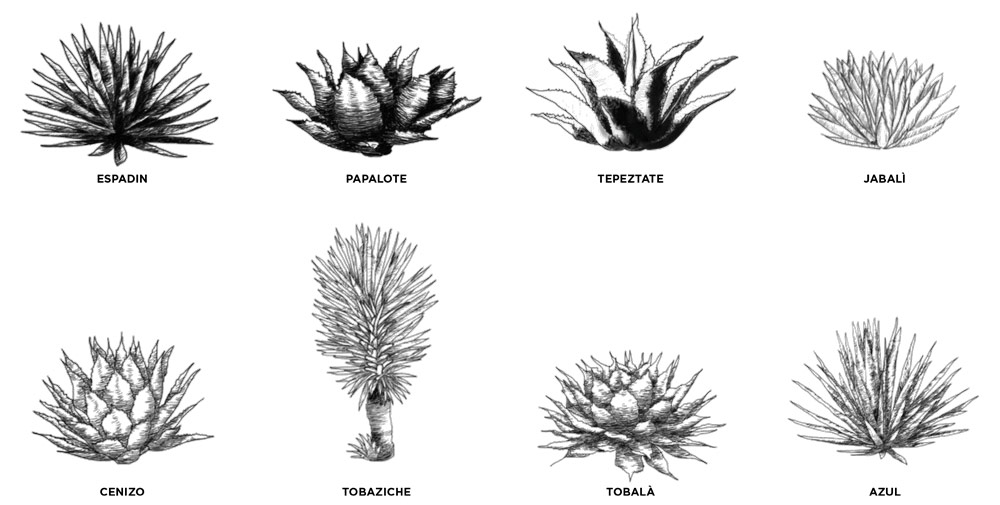
The Agave Salmiana Crassispina is probably the queen of wild agaves for mezcal production. Other notable agaves are: Agave Cupreata (Berger) used mainly in the Guerrero region and Agave Potatorum (Tobalà), sought after by many palenqueros in Oaxaca.
The most popular species of agave, however, is the Agave Espadin (Agave Angustifolia), which grows in Oaxaca and Guerrero and is preferred due to its good results, regional distribution and taste more suited to different palates.
In the production of mezcal, it is not uncommon to find 'ensembles', i.e. a blend of two or more species of agave that are combined during the cooking process.
The techniques and methods that make the difference
Agave cultivation methods establish the first distinction with regard to the quality of distillates. To begin with, the use of fertilisers, herbicides and pesticides reduces quality, which is why some producers have recently committed to organoleptic preservation in their cultivation processes.
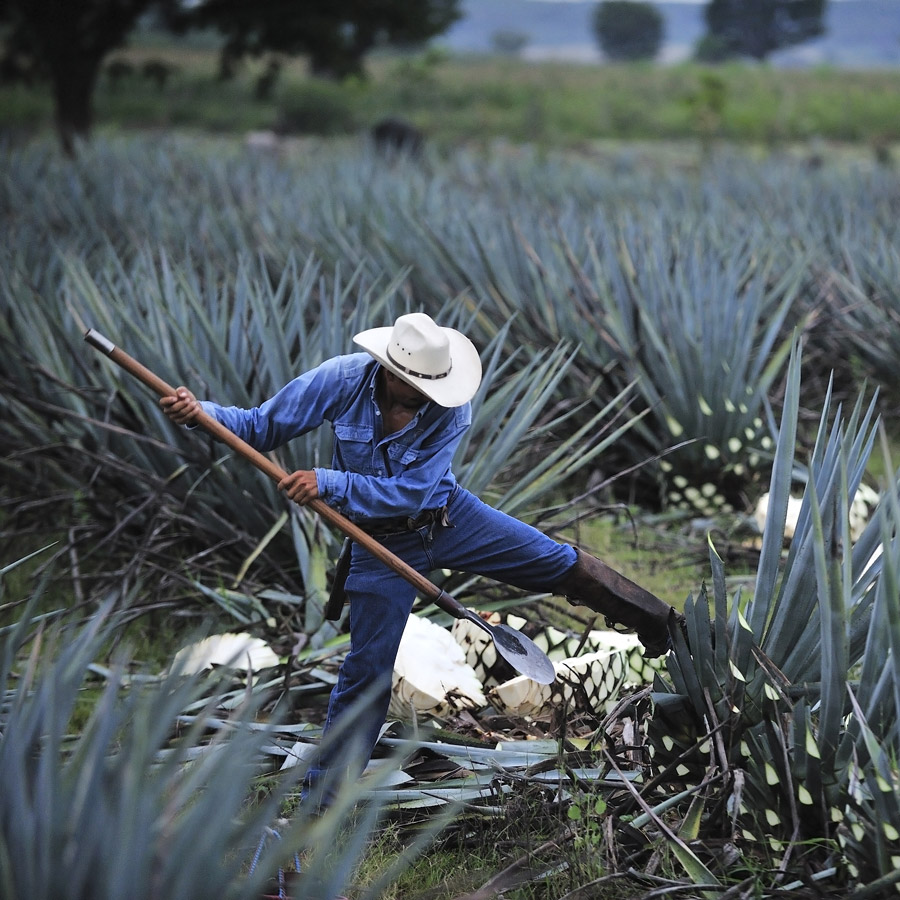
Once the plants are ripe, they move on to the real work, which begins with the jima (cutting) that isolates the heart of the plants (the so-called piñas), and continues with cooking, grinding, fermentation and distillation.
Finally, additional processes can be used, such as ageing in wood or flavouring with fruit and herbs or the addition of insects and larvae. Depending on the species, agave can take up to 15 years to mature. In the case of artisanal production, each plant is chosen at its peak of maturity, cleaned and cut (jimada) directly in the field.
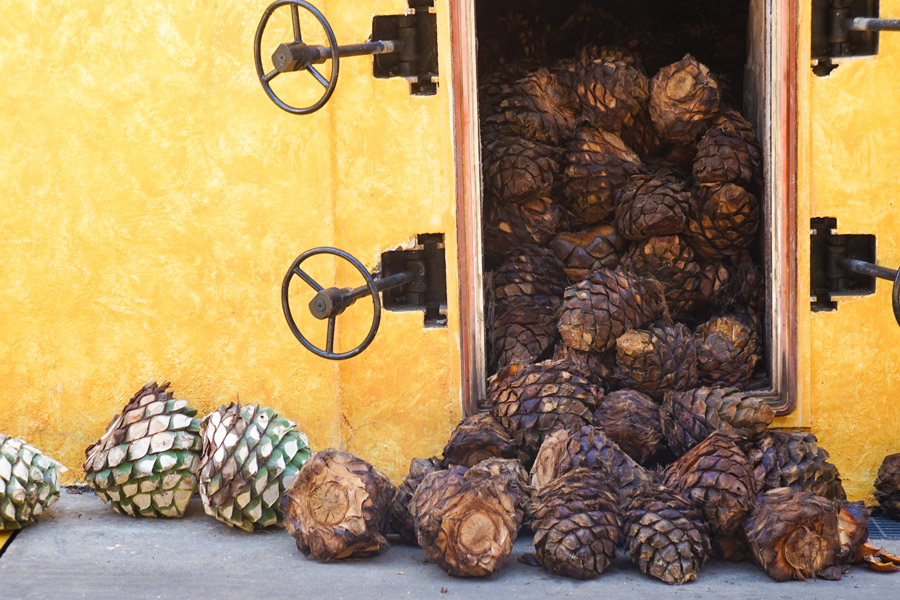
Baking can be done with different techniques: in an underground oven dug into the ground and covered with volcanic stones on the inside; in a masonry oven filled with firewood to produce direct heat or steam; in an autoclave that uses steam and requires a boiler; with an industrial diffuser that squeezes raw agaves and uses steam to extract sugar.
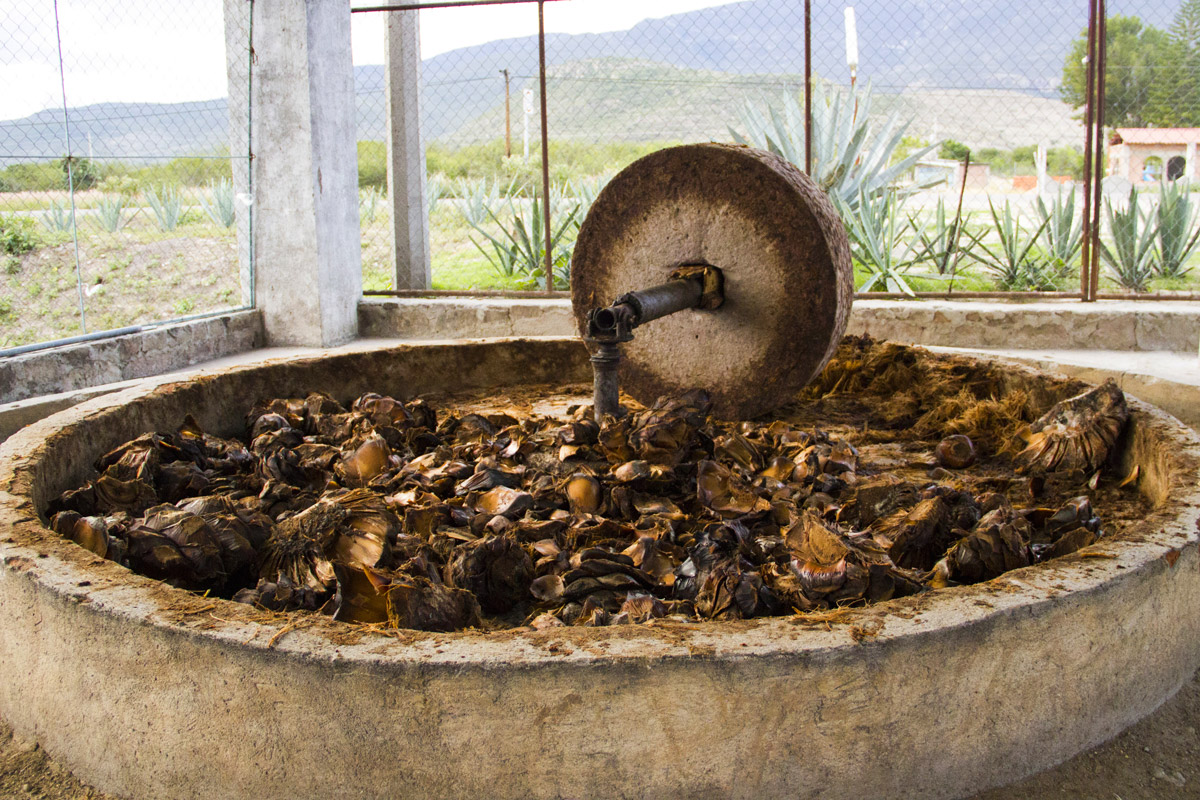
Milling is the process of squeezing the cooked agave fibres and extracting the juice. It can be carried out: in a tahona or stone mill, through a stone wheel pulled by animals; in a press; in mechanical mills; or manually (also called the canoe system), i.e. hitting and pounding the piñas with mallets inside a hollow tree trunk.
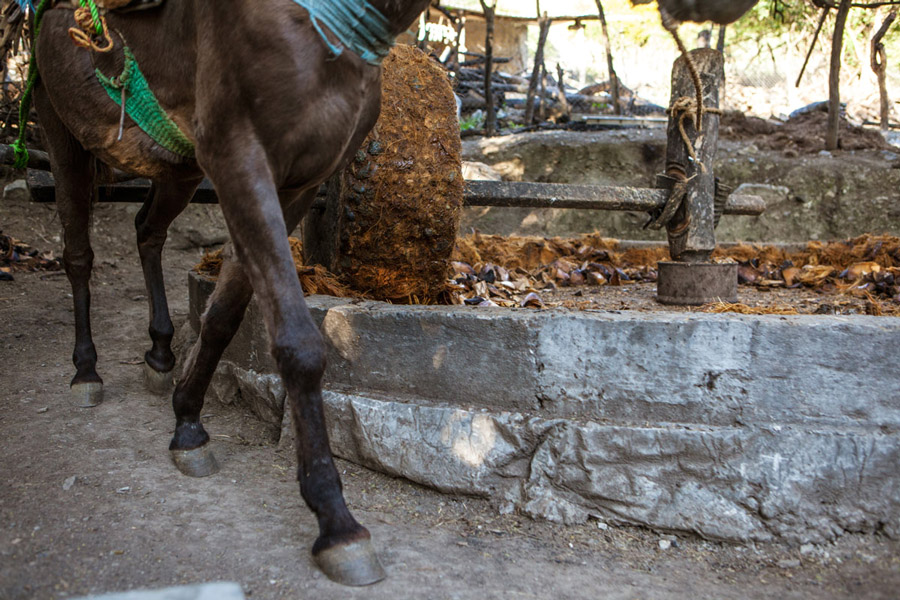
Fermentation can take place in tanks of various shapes and materials, between 200 and 500 litres, usually made of wood, but also steel, concrete or cowhide. Many artisanal producers wait for natural yeasts and bacteria to spontaneously ferment the musts and juices. Others inoculate selected yeasts using a more industrial process.
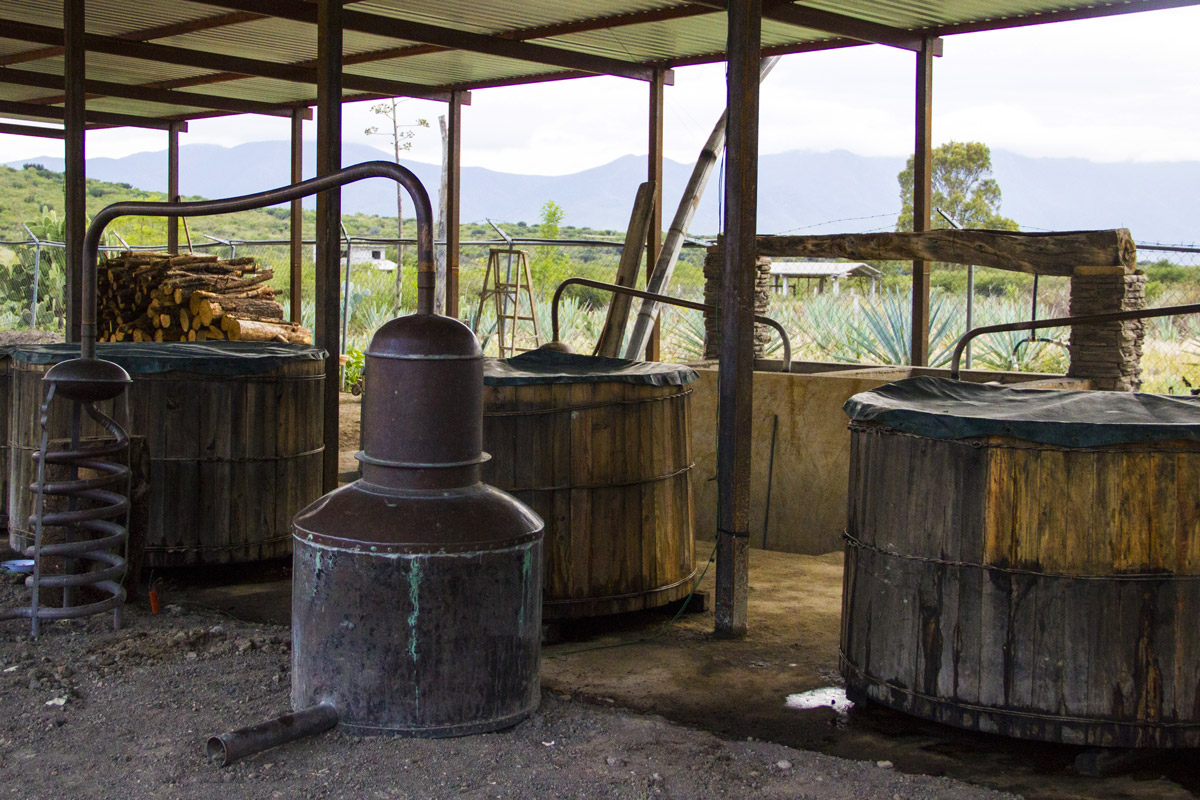
Distillation takes place in discontinuous or column stills. Ancestral mezcals are distinguished from artisanal mezcals by the fact that they are not distilled in alembics but in 'olla de barro', the traditional earthenware vessel that was brought to Mexico by Spanish galleons in the 1500s, still a characteristic element of some mezcals today. Artisanal mezcals are distilled in discontinuous stills that can be of different shapes and materials, such as copper or steel. Distillation in discontinuous stills produces aromatically much more complex distillates than those obtained by column distillation, usually used for more standardised and less characteristic productions.
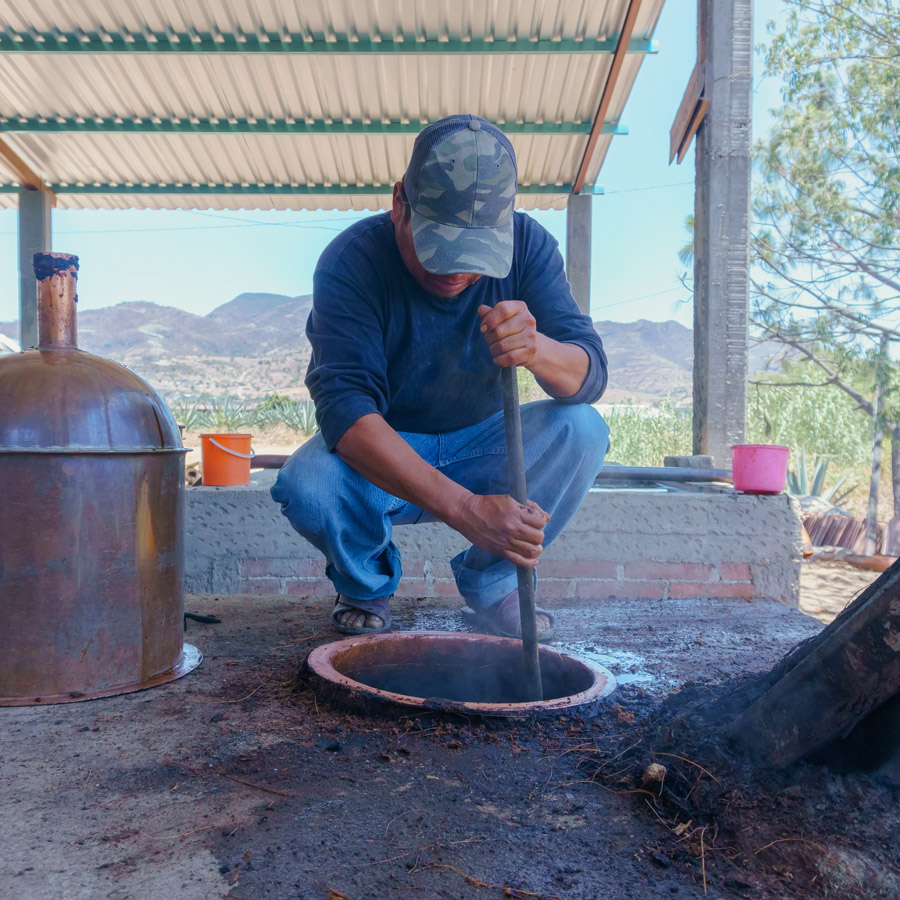
Mezcal is mainly produced by cooking the piñas inside ovens (or palenques) dug underground: conical in shape, they measure more than 3 metres in diameter and about 2.5 metres deep.
The pine cones are cooked for 2 to 3 days, then they are left to rest in the open air for a week and subsequently ground. The pulp, juice and fibres are mixed with water (about 10%) to produce a sweet liquid. The resulting fermentation liquid is poured into a cuve, where the natural fermentation can last from one to four weeks.
Distillation is generally carried out in copper stills (introduced by the Spanish) or even ceramic stills (introduced by the Chinese).
Traditionally, the mezcal thus obtained is aged in ceramic jars, although stainless steel cuvees are increasingly being used.
The introduction of kegs is relatively recent (1950) and these are mostly ex-bourbon kegs. Ex-sherry casks are used for special cuvees.
The categories of mezcal related to ageing are:
- Abacado: more commonly known under the name 'blanco' or 'joven', it is colourless and comes directly from the still.
- Reposado & Madurato: aged from 2 to 11 months in oak barrels or large casks.
- Añejo: left to age for at least 12 months in oak barrels of up to 200 litres, this mezcal can however wait several years before being bottled.
SELEZIONE MEZCAL


For the preparation of tequila, on the other hand, the Azul agave plants are cultivated for 8 to 12 years before the jimadores, who pluck the thorny leaves down to the piña, enter the scene. The largest piñas can weigh up to 150 kilos and are taken from the fields by burros (donkeys), transported to the distillery by truck and placed in brick or clay ovens where they cook for up to 36 hours. Afterwards, the softened pulp is cut into pieces and squeezed, then the juice obtained is collected in fermentation tanks, where it remains for 5-6 days before distillation.
The best quality tequila, labelled '100% Agave', contains no additives.
Its main varieties include:
- Tequila Blanco or Plata is the relatively young one, contains no colouring agents and has a distinct agave aroma. It is best consumed as an ingredient in margaritas and other cocktails.
- Tequila Reposado is the product matured in oak barrels for at least three months.
- Tequila Añejo is the one aged in wood for one to three years.
- Extra Añejo is the one aged over three years.




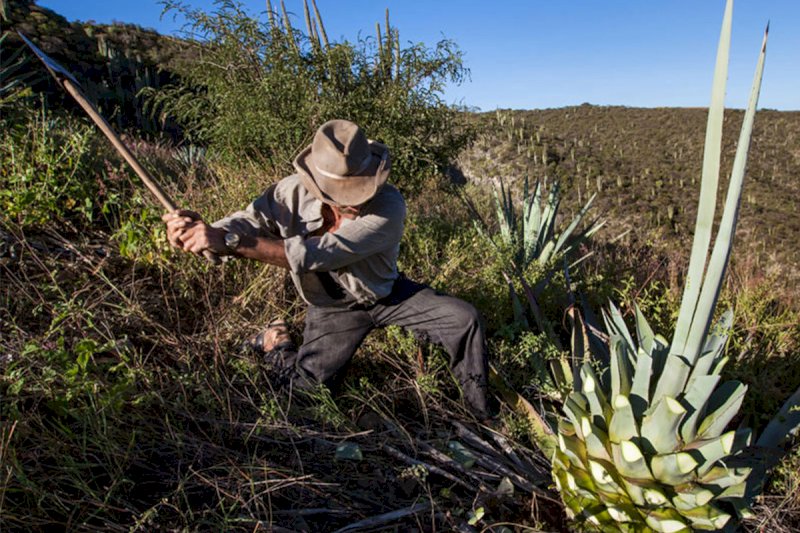
The complete guide to discovering Mezcal
While all tequilas are technically mezcals, the reverse is not true. Originally, all alcohol produced from agave juice was called mezcal. It is since the 19th century that the distinction between the two...
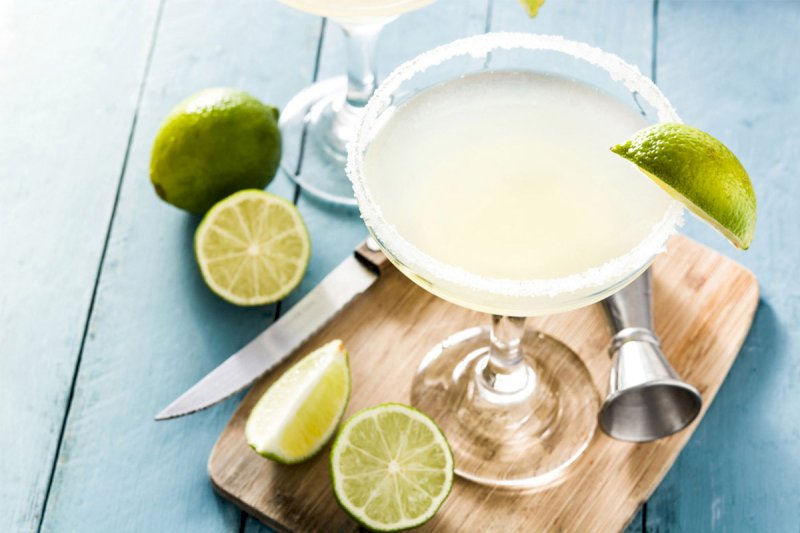
Margarita “Fun in Acapulco!”
Acapulco, 1963. In the famous film Fun in Acapulco, Elvis Presley sips Margaritas while filming several scenes, but it was mainly behind the scenes, it seems, that he enjoyed this cocktail the most. How...
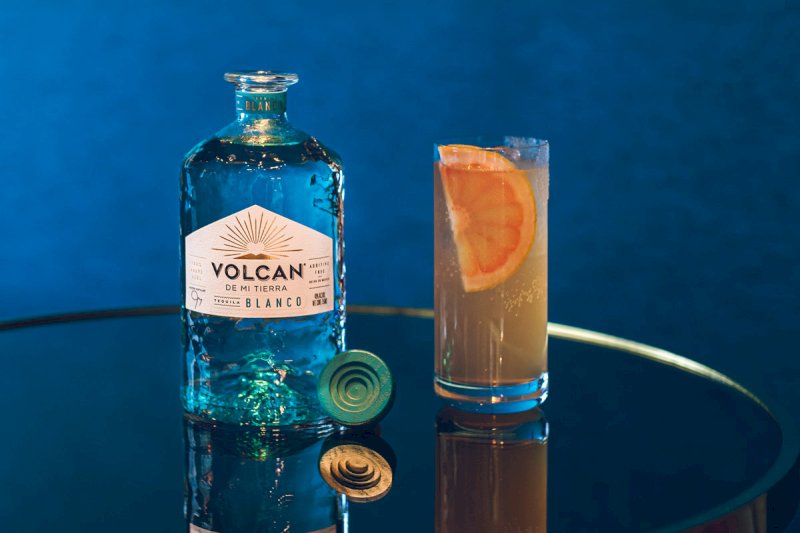
Paloma: Mexico in the glass
Tequila, lime juice and grapefruit soda, plus a pinch of salt: these are the simple ingredients of Paloma, a classic cocktail popular in Mexico. Officially defined as an 'aperitif', but just by dosing the...
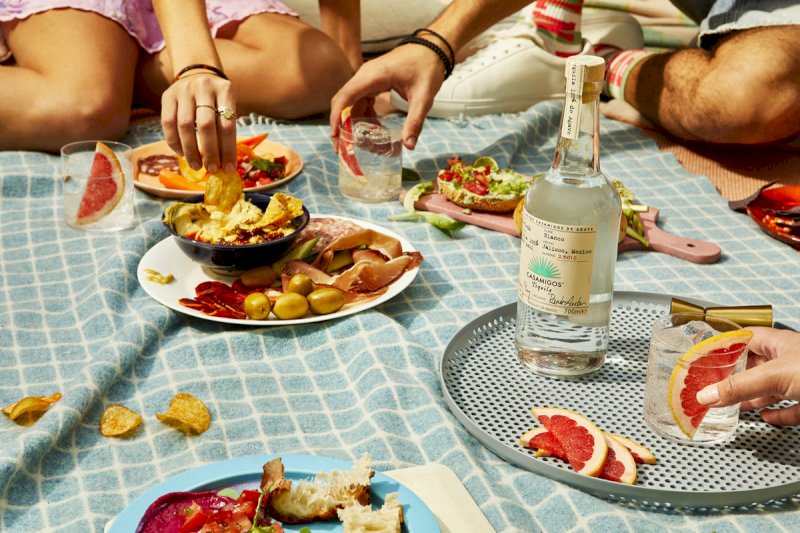
Casamigos: tequila made by friends for friends
The Casamigos distillery was born out of a friendship and passion for tequila.
It was founded by long-time friends Rande Gerber, Mike Meldman and actor George Clooney, who coined the motto:...
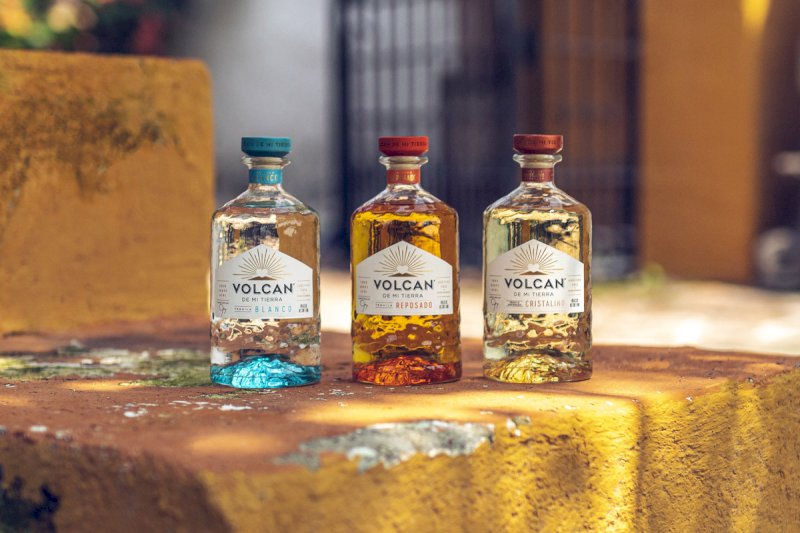
Volcan de mi Tierra: tequila born from the volcano
Volcán de mi Tierra is named after Jalisco's Volcán de Tequila, which erupted 200,000 years ago, irreversibly changing the soil and making it volcanic, ideal for growing blue agave. The project, launched...
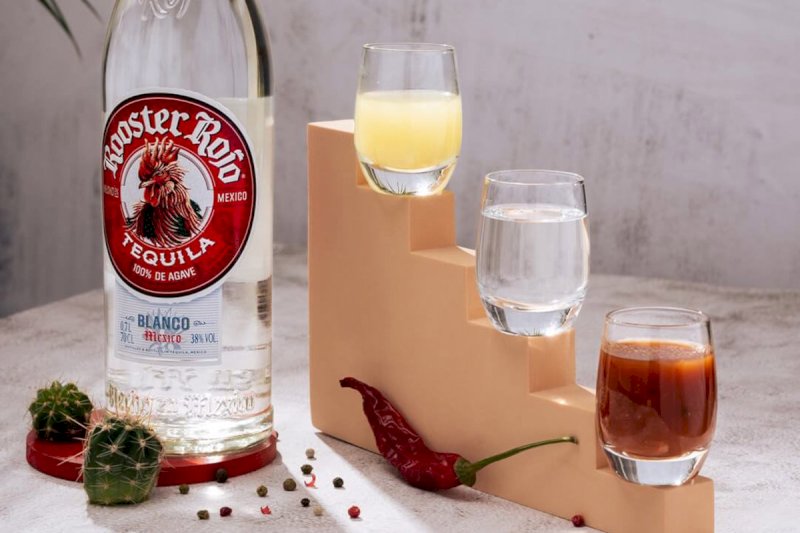
Rooster Rojo Tequila: 100% Blue Agave
24 July is National Tequila Day, a tribute to the traditional Mexican spirit that is conquering the world. Traditionally produced in the State of Jalisco from Agave Azul, which is harvested, fermented and...